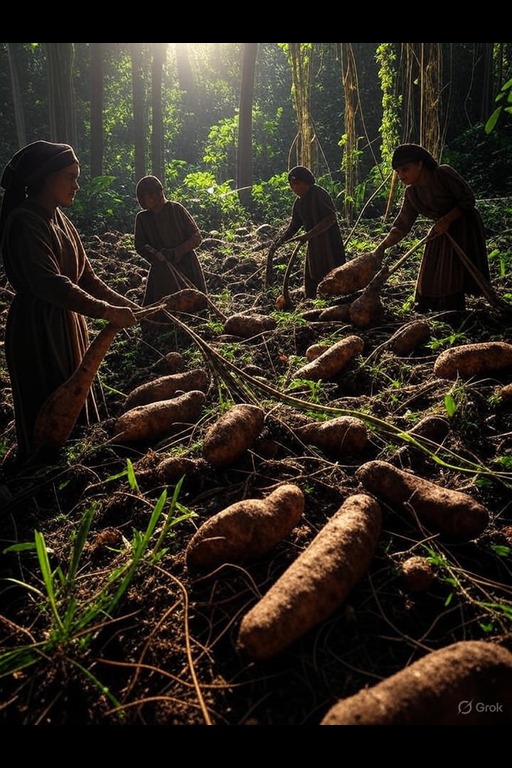
Yams are a staple crop cultivated in the warm, sun-drenched regions of the savanna and tropical wet forests. Their growth is influenced by seasonal patterns, soil types, and the agricultural methods passed down through generations. When harvested, yams boast a rich, earthy flavor that is cherished in various culinary traditions. Surpluses can be traded with neighboring regions, providing essential sustenance during lean times and long journeys.
Universal
Biomes
Politics
Alignments
Races
Resources
Classes
Elevations
Religions
World
No accessible MAPs found.
Biome
Politics
Alignment
Race
Resource
Class
HeightMap
Yams
Detailed Description
The cultivation of yams thrives in environments characterized by well-drained soils and an abundance of sunlight. Farmers carefully select their planting sites, often favoring areas with a mixture of loamy and sandy soils that promote healthy root development. The rhythms of the seasons dictate planting and harvesting times, ensuring that yields are maximized and the roots reach their peak flavor. Traditional practices, such as crop rotation and intercropping, are frequently employed to maintain soil health and bolster yam production over time. As the yams mature beneath the earth, they develop a starchy, nutrient-rich flesh that can be prepared in a multitude of ways. Various culinary techniques highlight these tubers' versatility; they can be boiled and mashed, sliced and fried into crispy chips, or slowly stewed with spices to create hearty soups. The preparation of yams varies by region, influenced by local tastes and available ingredients, making them a beloved component of many meals. Beyond their culinary applications, yams hold significance in trade as a valuable commodity. Surplus harvests are often preserved through drying or pickling, extending their shelf life and enhancing their portability for long caravans traveling across challenging terrains. The pickled and dried forms of yams are especially prized, as they provide nourishment and sustenance throughout the seasons, particularly in winter months when fresh produce is scarce. This trade contributes to the economic vitality of agricultural communities, allowing them to thrive through the exchange of goods and resources.
Examples
In kitchens across various regions, yams transform into delightful dishes such as creamy yam mash or a comforting yam soup enriched with local spices. Pickled yams serve as a tangy accompaniment to meals, while dried yam chips provide a nutritious snack option. The versatility of yams extends into livestock feed, where they contribute to the health of domesticated animals. Each preparation reflects the rich traditions surrounding this cherished crop, embodying the connection between the land, its people, and their culinary heritage.