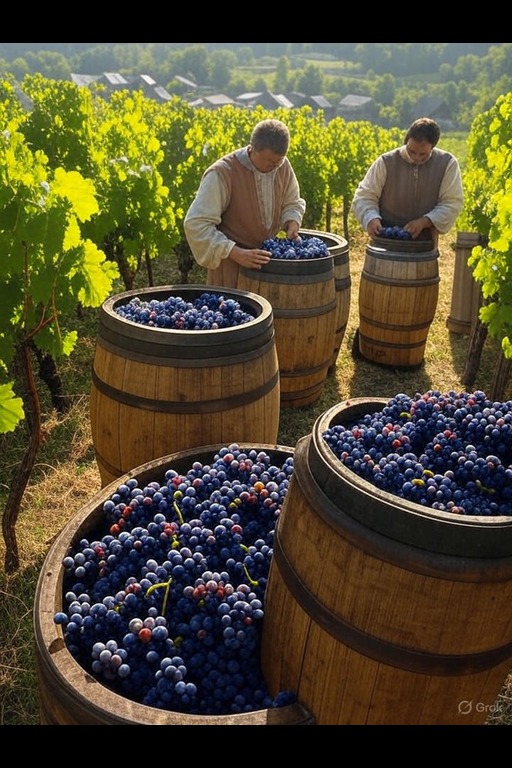
Wine Grapes are cultivated in regions characterized by mild seasons and fertile soils, particularly within temperate deciduous forests. These fruits are prized for their versatility in culinary applications and their central role in brewing. Market towns along well-traveled roads serve as hubs for the trade of Wine Grapes, where artisans and merchants gather to exchange goods. The high demand for these grapes ensures they command good prices, especially when sourced from reputable growers.
Universal
Biomes
Politics
Alignments
Races
Resources
Classes
Elevations
Religions
World
No accessible MAPs found.
Biome
Politics
Alignment
Race
Resource
Class
HeightMap
Wine Grapes
Detailed Description
The cultivation of Wine Grapes thrives in the temperate deciduous forest biome, where a balanced climate supports the growth of this cherished fruit. Ideal conditions include warm summers and cool winters, allowing the grapes to develop complex flavors and aromas. Vines flourish in well-drained soils enriched with organic matter, and care must be taken to protect them from pests and diseases. Growers utilize various techniques, such as pruning and training, to maximize sunlight exposure and air circulation, which enhances the quality of the grapes. Harvesting typically occurs in late summer to early autumn, when the grapes have reached their optimal ripeness, resulting in a bounty of fruit ready for various uses. Once harvested, Wine Grapes are often transported to market towns where they are graded based on quality and intended use. Artisans frequently transform these grapes into a variety of products, including glazes for culinary dishes, liqueurs for spirited beverages, and preserves that capture the essence of the fruit for year-round enjoyment. The trade of Wine Grapes is a vital economic activity, as they not only provide sustenance but also contribute to the cultural fabric of communities that celebrate the art of winemaking and gastronomy. The popularity of Wine Grapes extends beyond mere consumption; they symbolize social gatherings and festive occasions. As merchants transport these sought-after fruits along well-traveled routes, they foster connections between diverse regions and cultures. The commerce surrounding Wine Grapes cultivates a vibrant marketplace, where seasonal festivals often showcase local specialties, further enhancing their desirability. With each grape that finds its way into a bottle or dish, a story of the land, care, and craftsmanship is shared among those who partake in its bounty.
Examples
Among the many culinary creations resulting from Wine Grapes, a rich glaze can elevate a simple dish to new heights, adding depth and sweetness. Wine Grapes liqueur, often enjoyed as an after-dinner drink, captures the essence of the fruit while providing a delightful balance of flavors. Preserves made from these grapes allow for a taste of summer throughout the year, perfect for spreading on bread or as an accompaniment to cheeses. Each of these products showcases the versatility of Wine Grapes, making them a favored resource in both kitchens and marketplaces.