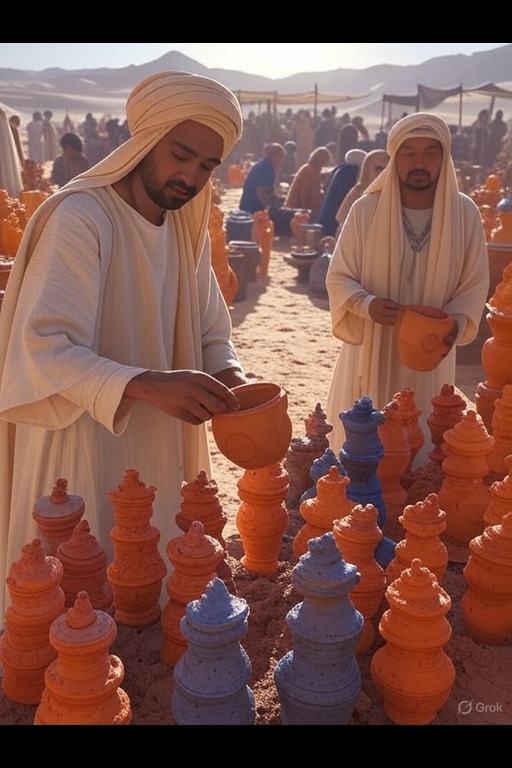
Windblown Clay is a versatile natural resource found in arid landscapes, particularly in hot and rocky deserts. It is formed through the erosion of ancient rocks, carried by the wind to settle in various locations. Harvesters skillfully extract it, ensuring that they do not deplete the fragile environments that sustain their sources. This clay is essential for local craftsmanship and trade, fostering communities around abundant deposits.
Universal
Biomes
Politics
Alignments
Races
Resources
Classes
Elevations
Religions
World
No accessible MAPs found.
Biome
Politics
Alignment
Race
Resource
Class
HeightMap
Windblown Clay
Detailed Description
Windblown Clay is a naturally occurring material shaped by the elements over time. It emerges in regions characterized by hot deserts and xeric scrublands, where strong winds continuously erode the landscape. As rocks break down and are carried off, fine particles settle in depressions and low-lying areas, creating deposits that can be harvested. The quality and consistency of this clay can vary significantly depending on the specific location and the local environmental conditions, making the skill of the harvesters paramount to ensure a sustainable yield without exhausting the resource. Harvesters often take into account the seasonal changes in these arid regions, as the clay can become more pliable after rare rainfalls, making it easier to work with. However, they must also be cautious, as overharvesting can lead to soil degradation and a loss of the delicate balance in the ecosystem. With expertise and respect for their environment, many have honed their techniques to gather Windblown Clay without leaving long-lasting impacts. Various communities have formed around the rich deposits, their economies and cultures deeply intertwined with the extraction and use of this material. The industries that benefit from Windblown Clay are diverse, with pottery and brickmaking at the forefront. Artisans skillfully mold the clay into various functional and decorative items, ranging from simple pots to intricate figurines. Bricks crafted from this material serve as durable building blocks, while tiles and kiln wares are integral to local architecture and craftsmanship. The trade of these goods provides a vital source of income for many communities, linking their markets and fostering relationships across regions. The versatility of Windblown Clay allows for a wide range of artistic expression, making it a favored medium among local craftspeople.
Examples
Common products made from Windblown Clay include sturdy clay pots that serve both practical and aesthetic purposes. Bricks fashioned from this material are used in construction, while handcrafted tiles adorn homes and public spaces alike. Figurines, often depicting local flora and fauna, reflect the artistry of the region, showcasing the skill of the artisans. Kiln wares produced from this clay are essential for various crafts, enabling the firing of pottery and other clay items. The breadth of these applications underscores the importance of Windblown Clay in sustaining both local economies and cultural heritage.