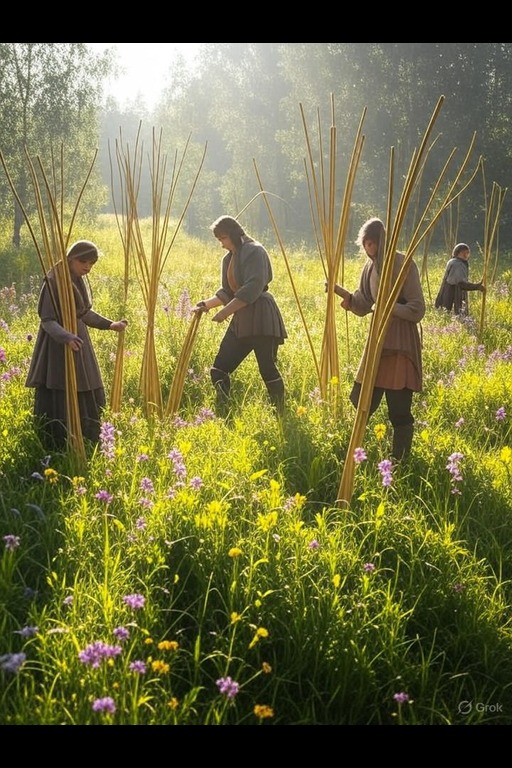
Willow Poles are a vital resource found naturally in temperate dry grasslands. Harvesters skillfully gather these resilient poles, ensuring that local stocks remain sustainable. They play a significant role in various crafts and trades, contributing to the livelihoods of nearby settlements. Their versatility supports industries ranging from construction to shipbuilding and carpentry.
Universal
Biomes
Politics
Alignments
Races
Resources
Classes
Elevations
Religions
World
No accessible MAPs found.
Biome
Politics
Alignment
Race
Resource
Class
HeightMap
Willow Poles
Detailed Description
The Willow Pole is a slender, flexible growth that thrives in the open expanses of temperate dry grasslands. Known for its lightness and strength, this natural resource is highly sought after for its structural applications. When properly harvested, willow poles can be used in a multitude of ways, from the construction of sturdy frameworks to the crafting of intricate wooden tools. Their inherent flexibility allows them to withstand considerable tension, making them particularly effective in environments where resilience is essential. Harvesting these poles requires a keen awareness of seasonal cycles and growth patterns, as well as an understanding of sustainable practices to avoid depleting local populations. In addition to its structural uses, willow poles also serve as a source of charcoal, which is used in various heating and crafting applications. As the wood burns cleanly and produces a high heat output, it is favored by artisans and blacksmiths alike. The bark of the willow can be processed into resin pitch, a valuable adhesive in construction and repair, further extending the utility of this remarkable resource. Skilled craftspeople utilize the poles to create beams and planks, tapping into their natural properties to construct durable and aesthetically pleasing structures. This versatility makes willow poles a cornerstone of the local economy within regions where they are abundant. Trade in willow poles often supports local economies, leading to the establishment of marketplaces and workshops that specialize in their processing and sale. As artisans gather to exchange goods and knowledge, communities flourish around this resource, fostering a sense of collaboration and shared expertise. The demand for willow poles spans a variety of industries, including logging, construction, carpentry, and shipbuilding, solidifying its importance in everyday life. The cultivation and harvest of willow poles not only supply essential materials but also contribute to the cultural identity of the settlements that rely on them, creating a deeper connection between the people and their environment. Efforts to maintain the balance of willow pole stocks are crucial, as overharvesting can threaten the very resource that communities depend upon. Thus, the relationship between harvesters and their environment reflects a broader understanding of stewardship, ensuring that future generations can continue to benefit from this indispensable resource. Through sustainable practices, the legacy of willow poles remains intertwined with the progress of craft and trade in the temperate dry grasslands.
Examples
Common products derived from willow poles include planks and beams that form the backbone of many structures. Artisans craft numerous wooden tools, showcasing the material's versatility and strength. Additionally, the production of charcoal from willow contributes to heating and cooking needs, while resin pitch serves as an essential adhesive. The wide array of uses for willow poles highlights their significance across various industries and local economies.