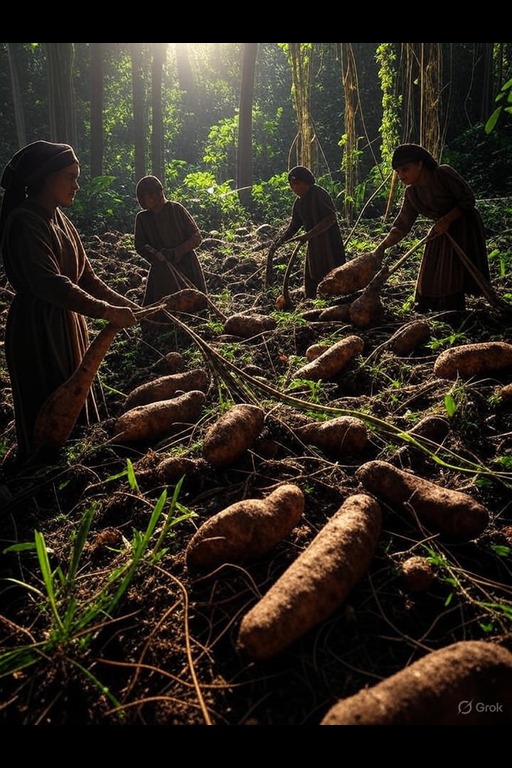
Wild yams are a vital resource found in the depths of tropical wet forests. These tubers thrive in the rich, loamy soil, and their growth is closely tied to the seasonal rainfall patterns. Harvesters, employing their knowledge of the environment, skillfully gather wild yams, ensuring that local stocks remain sustainable. The versatility of wild yams supports various industries, particularly culinary and trade, and many communities are established near abundant sources of this valuable resource.
Universal
Biomes
Politics
Alignments
Races
Resources
Classes
Elevations
Religions
World
No accessible MAPs found.
Biome
Politics
Alignment
Race
Resource
Class
HeightMap
Wild Yams
Detailed Description
Wild yams, with their robust vines and hearty tubers, play a crucial role in the ecosystems of tropical wet forests. These forests, known for their dense foliage and vibrant biodiversity, provide an ideal environment for wild yams to flourish. The growth cycle of these plants aligns harmoniously with the seasonal rains, which saturate the soil and promote healthy development. As a result, the presence of wild yams often signifies rich, fertile land that can support not only the plants themselves but also the myriad of wildlife that depend on them for sustenance. Harvesting wild yams requires both skill and a deep understanding of the local environment. Knowledgeable gatherers know when to collect the tubers to maximize their yield while ensuring the plants can regenerate for future seasons. This practice necessitates a careful balance, as overharvesting can lead to depletion of stocks, threatening the resource that many communities rely upon. As such, sustainable harvesting techniques are often passed down through generations, fostering a sense of stewardship among those who collect this resource. In addition to being a staple food source, wild yams are integral to local economies. Their adaptability makes them suitable for various culinary applications, from fresh consumption to preservation methods such as drying and pickling. The resulting products, including dried goods and preserves, are highly sought after, often traded with neighboring settlements. Furthermore, wild yams can be processed into salts and spices, adding value and versatility that enhance their market appeal. The trade of these products fosters connections between communities, both economically and culturally, as they share knowledge and techniques surrounding the use of wild yams. Communities situated near abundant sources of wild yams often develop specific culinary traditions centered around this resource. Recipes and methods evolve, showcasing the unique flavors and textures that wild yams can offer. These dishes not only nourish the body but also serve as a cultural expression, reinforcing social bonds and local identity. As such, wild yams are more than just a food source; they are woven into the fabric of life in the tropical wet forests, reflecting a symbiotic relationship between nature and community.
Examples
Wild yams can be found in a variety of culinary products, demonstrating their versatility. Dried wild yam slices serve as a nutritious snack and a staple ingredient in local dishes, while preserves made from the tubers offer a sweet complement to meals. Trade packs filled with wild yam products are exchanged between communities, allowing for the sharing of culinary traditions. Additionally, wild yams are often ground into flour, which can be used in baking, further expanding their utility in various regional cuisines.