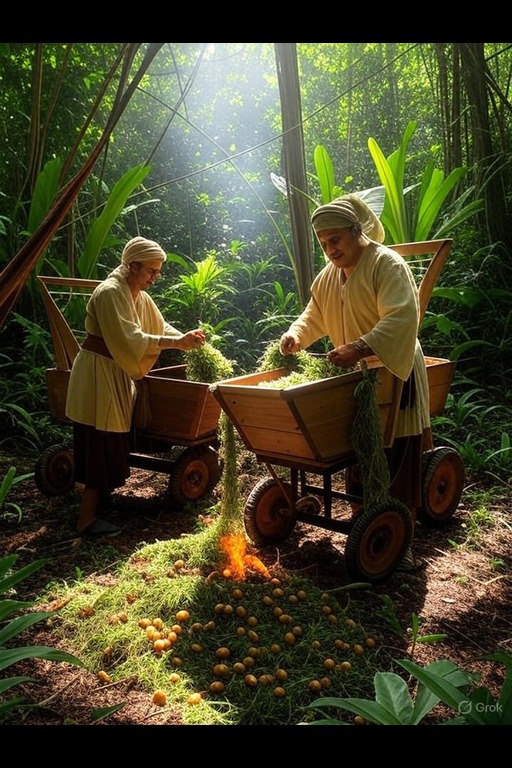
Wild silk is a remarkable textile harvested from the cocoons of jungle moths, known for its coarse yet durable texture. This unique fiber is particularly adept at resisting mold, making it ideal for the humid conditions of seasonal rainforests. Collectors engage in an intricate process to boil the cocoons, allowing them to reel the uneven threads into usable cloth. Its versatility lends itself to a range of applications, from everyday textiles to specialized protective gear.
Universal
Biomes
Politics
Alignments
Races
Resources
Classes
Elevations
Religions
World
No accessible MAPs found.
Biome
Politics
Alignment
Race
Resource
Class
HeightMap
Wild Silk
Detailed Description
The production of wild silk begins with the careful collection of moth cocoons found nestled among the dense foliage of seasonal rainforests. Harvesters often venture deep into the undergrowth, guided by their knowledge of moth behavior and habitat, to locate these precious resources. The cocoons, often camouflaged against the vibrant backdrop of the jungle, are a testament to the moths' ability to weave intricate protective layers that support their transformation. Once gathered, the cocoons undergo a vital process of boiling, which softens the fibers and allows for the extraction of the silk threads. This pivotal step not only prepares the material for weaving but also reveals the unique character of wild silk, with its uneven texture contributing to a distinctively rustic appearance. The inherent durability of wild silk makes it a sought-after resource in various industries, particularly in textiles and weaving. Craftspeople appreciate its resilience, especially in environments where fabrics are prone to wear and decay. The ability of wild silk to withstand moisture also lends itself well to applications such as cords and ropes, where strength and longevity are paramount. Additionally, wild silk finds its way into quilted armor padding, offering a layer of protection without sacrificing mobility or comfort. As trade routes develop, wild silk becomes a valuable commodity, with merchants exchanging it for other goods, enhancing its status within regional economies. Beyond its practical uses, wild silk carries cultural significance, often associated with craftsmanship and the artistry of textiles. Artisans experiment with its qualities to create decorative fabrics that reflect the vibrant colors and patterns of the rainforest. This results in products that are not only functional but also aesthetically pleasing, serving as a means of expression and storytelling. The trade in wild silk encourages creativity and innovation among artisans, fostering a rich tradition of textile production that honors the resources of the land. As such, wild silk occupies a unique place in the tapestry of cultural and economic life, bridging the natural world with human ingenuity.
Examples
Wild silk is transformed into a variety of products that serve both practical and artistic needs. Cloth made from this fiber often features a rugged texture, making it suitable for everyday garments and durable accessories. In addition, cords and ropes crafted from wild silk are favored for their strength, particularly in maritime applications. Quilted armor padding utilizes wild silk for its lightweight yet protective properties, while decorative fabrics showcase the vibrant hues of the rainforest. As a trade good, wild silk continues to inspire demand, reflecting the intricate relationship between environment and economy.