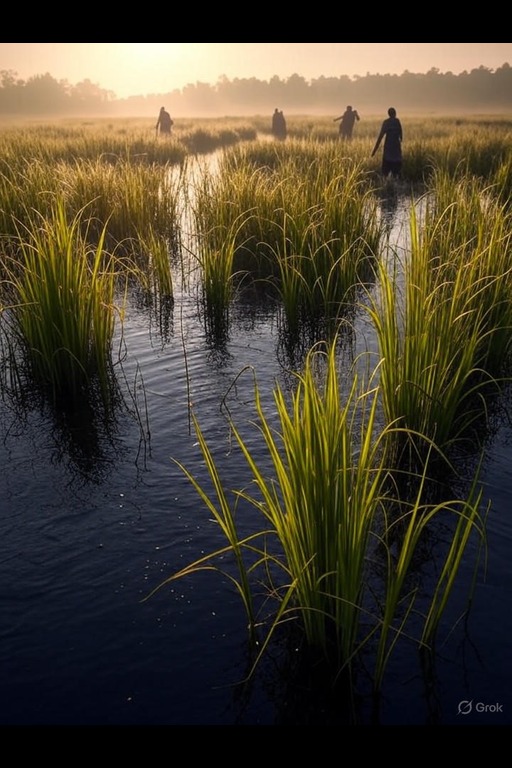
Wild Rice, commonly referred to as Zizania, is a staple crop cultivated in the open, shallow waters of wetlands. Known for its long, slender grains and nutty flavor, this aquatic plant thrives in the unique conditions that wetlands provide. Harvesting occurs at peak ripeness to ensure minimal losses, as timely processing is crucial. Rapid drying, milling, or slicing takes place on the day of the harvest to safeguard against spoilage caused by the often unpredictable weather conditions of its habitat.
Universal
Biomes
Politics
Alignments
Races
Resources
Classes
Elevations
Religions
World
No accessible MAPs found.
Biome
Politics
Alignment
Race
Resource
Class
HeightMap
Wild Rice (Zizania)
Detailed Description
The cultivation of Wild Rice is intrinsically linked to the wetland ecosystems where it flourishes. These areas are characterized by a mix of shallow water and rich, organic soil that supports the growth of Zizania. The plant typically grows in dense stands, forming lush fields that sway gently with the movement of water. Farmers often manage these plots with careful attention to water levels, as both too much and too little can adversely affect the growth and yield of the rice. The harvesting process is labor-intensive; individuals often wade into the waters, using specialized tools to gather the ripe heads while ensuring the preservation of the plants for future seasons. Once harvested, the grain undergoes immediate processing to maintain its quality. The delicate nature of Wild Rice necessitates that processing begins the same day it is collected. The grains are either dried to enhance their durability or milled to produce flour. This flour can then be used in a variety of culinary applications, and it is known for imparting a unique flavor and texture to baked goods. Alternatively, the grains can be sliced and preserved, allowing for long-term storage and use in diverse recipes. The rapid transition from field to food is essential in maintaining the distinctive qualities that make Wild Rice a sought-after ingredient in many culinary traditions. In terms of its economic impact, Wild Rice plays a significant role in local agriculture and food trade. It is often regarded as a valuable commodity, with demand extending beyond local markets to distant regions. Its versatility allows it to be processed into various products, including staples like bread and preserved grains that feature prominently in the diets of many communities. The unique characteristics of Wild Rice lend themselves well to trade, making it a desirable good among merchants and buyers alike, thus fostering connections between different regions through the exchange of this cherished resource.
Examples
Wild Rice is utilized in numerous culinary creations, from hearty breads that showcase its robust flavor to simple side dishes that highlight its texture. The flour derived from this grain serves as a base for artisanal baked goods that are popular among discerning cooks. Additionally, preserved grains are crafted for long-term storage, ensuring that the rich taste and nutritional benefits of Wild Rice can be enjoyed well beyond the harvest season. Beyond the kitchen, the trade of Wild Rice has fostered economic relationships, making it a vital ingredient in the broader food market.