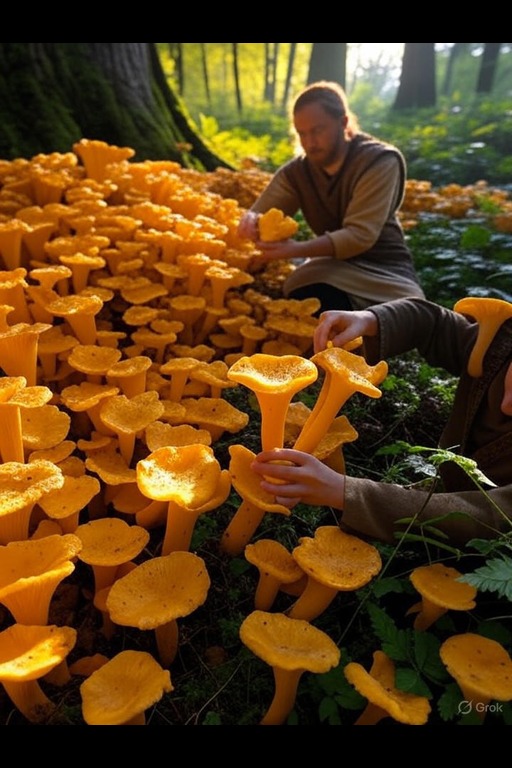
Wild Mushrooms (Chanterelle) are a valued resource often found in the lush undergrowth of temperate rainforests. These vibrant fungi are characterized by their unique shape and rich coloration, which can range from golden yellow to a deep orange. Foragers gather them with minimal tools, ensuring a sustainable approach by leaving behind any unsuitable specimens. The careful selection process contributes to their appeal in various industries, including crafting and trade.
Universal
Biomes
Politics
Alignments
Races
Resources
Classes
Elevations
Religions
World
No accessible MAPs found.
Biome
Politics
Alignment
Race
Resource
Class
HeightMap
Wild Mushrooms (Chanterelle)
Detailed Description
The Chanterelle mushroom stands out not only for its striking appearance but also for its culinary and practical applications. These mushrooms thrive in the damp, shaded environments of temperate rainforests, often nestled among the roots of ancient trees or hidden beneath a layer of fallen leaves. Their distinctive funnel shape and ribbed underside make them easily recognizable to those familiar with foraging. Harvesting them requires a keen eye and a gentle touch, as mishandling can damage both the mushrooms and the surrounding ecosystem. Foragers take care to gather only the sound specimens, ensuring that the delicate balance of the forest remains undisturbed. Beyond their role in sustenance, Chanterelles have found a place in various industries. In crafting, they can be transformed into natural dyes that impart earthy tones to textiles and other materials. The durability of these mushrooms, when properly dried, allows them to serve as components in an array of trade goods, appealing to merchants and artisans alike. Their organic composition makes them suitable for creating unique building materials, where they lend an aesthetic charm to structures. Additionally, their lightweight nature can be harnessed in the transport of goods, providing an eco-friendly alternative to synthetic options. The allure of Chanterelles extends to the culinary realm, where they are celebrated for their rich, peppery flavor, making them a sought-after ingredient in numerous dishes. Foragers often share their findings with local communities, fostering a culture of collaboration and respect for nature. The act of gathering Chanterelles is often steeped in tradition, where the knowledge of where and when to harvest is passed down through generations, preserving both the practice and the environment. As such, the Chanterelle mushroom serves as a bridge between the natural world and human creativity, embodying the harmony that can exist when resources are respected and utilized sustainably.
Examples
In addition to their use in crafting and trade, Wild Mushrooms (Chanterelle) are employed in making various products that enhance daily life. Artisans often incorporate them into decorative crafts, while builders appreciate their qualities in eco-conscious construction materials. They can also be used in tools designed for lightweight transport, demonstrating versatility across multiple industries. The continued gathering and processing of Chanterelles play a vital role in local economies, fostering connections between communities and their natural resources.