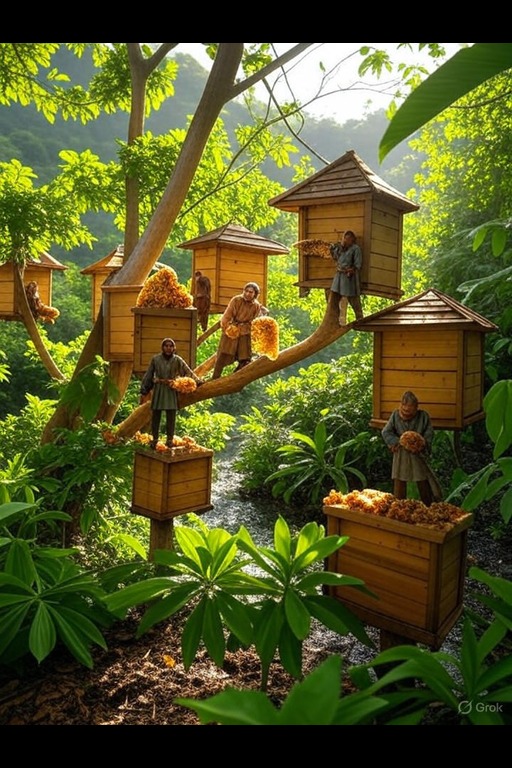
Wild Honeycombs are a natural resource found in various tropical biomes, thriving in both dry and wet forests. Harvesters depend on seasonal patterns and their own expertise to collect it sustainably, ensuring that local stocks remain abundant. This resource plays a crucial role in supporting local crafts and trade, often attracting settlements that seek proximity to reliable sources. The versatility of wild honeycombs contributes to their significance in various industries, including brewing and culinary arts.
Universal
Biomes
Politics
Alignments
Races
Resources
Classes
Elevations
Religions
World
No accessible MAPs found.
Biome
Politics
Alignment
Race
Resource
Class
HeightMap
Wild Honeycombs
Detailed Description
In the verdant expanses of tropical dry and wet forests, wild honeycombs are formed by industrious bees, collecting nectar from the myriad of flowering plants that flourish year-round. The honey itself is a sweet, viscous substance, prized for its rich flavor and various uses. Harvesting this resource requires both skill and knowledge of the local environment, as the bees can be temperamental and their hives hidden among the dense foliage. Knowledgeable foragers learn to recognize the signs of bee activity and the seasonal cycles that dictate when honeycombs are ripe for collection. Such practices ensure that the delicate balance of the ecosystem is preserved, while providing a consistent supply of this sought-after commodity. The raw honey extracted from these wild honeycombs serves as a foundational ingredient in numerous culinary delights, from sweet pastries to invigorating beverages. In addition to its culinary applications, honey is also valued for its preservative qualities, making it an essential component in the crafting of salves and other medicinal products. When combined with other natural ingredients, it enhances not only flavor but also the effectiveness of herbal remedies. The wax harvested from honeycombs is equally important, as it is often molded into candles that illuminate homes with a warm glow, adding both ambiance and functionality to daily life. Trade networks flourish around the collection of wild honeycombs, with artisans and merchants traveling to share and sell their goods at local markets. This resource contributes to the economy of surrounding settlements, fostering a sense of community among those who rely on the bounty of nature for their livelihoods. As local craftspeople refine their skills, new methods of brewing and baking emerge, showcasing the versatility of honey in culinary creation. This rich interplay of resource, craft, and trade highlights the integral role that wild honeycombs play in the cultural fabric of the region, echoing the interconnectedness of people and their environment.
Examples
Wild honeycombs find their way into a variety of products that enrich the lives of those who utilize them. Mead, a fermented beverage, showcases the sweet flavor of honey, often enjoyed during communal gatherings. In addition, wax candles made from honeycomb wax burn brightly, their soft glow creating a welcoming atmosphere. Culinary creations such as honey cakes are cherished for their delightful sweetness, while preserves made with wild honey add a unique twist to spreads. Salves, crafted from honey and herbs, provide comfort and relief, exemplifying the resource's versatile applications.