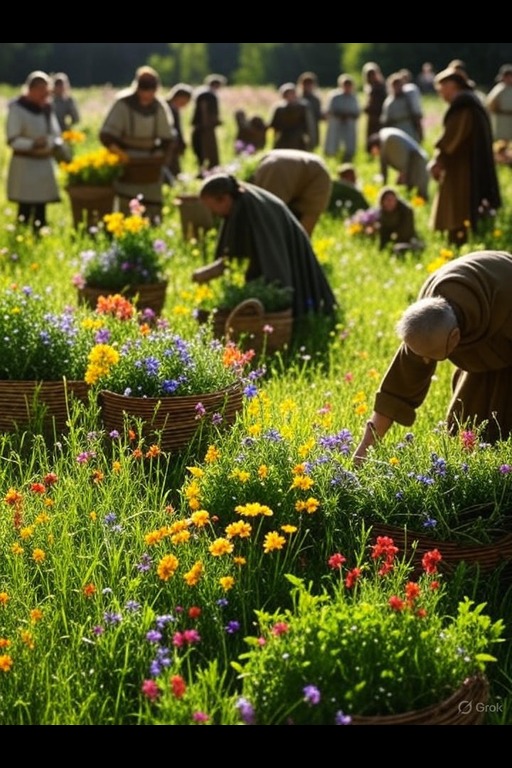
Wild herbs are a vital resource found in temperate dry and wet grasslands. These plants flourish in a variety of conditions and are harvested by skilled gatherers who understand seasonal patterns. They play a crucial role in local economies, supporting herbalism, culinary arts, and medicine. Many communities thrive near abundant sources of these herbs, which are essential for both trade and daily living.
Universal
Biomes
Politics
Alignments
Races
Resources
Classes
Elevations
Religions
World
No accessible MAPs found.
Biome
Politics
Alignment
Race
Resource
Class
HeightMap
Wild Herbs
Detailed Description
Among the swaying grasses and vibrant wildflowers of temperate grasslands, wild herbs emerge as resilient and diverse flora. These plants, ranging from aromatic leaves to vibrant blooms, are often at the heart of local economies and cultural practices. Gatherers with a keen eye and deep knowledge of the land can identify the best times for harvesting, ensuring that these valuable resources are collected sustainably. This careful approach not only preserves the ecosystems but also maintains the delicate balance between supply and demand among local populations. The culinary applications of wild herbs are vast and varied, lending unique flavors to dishes while also enhancing their nutritional profiles. Chefs and home cooks alike cherish these ingredients for their ability to transform simple meals into experiences rich with aroma and taste. From fragrant sprigs used in seasoning to dried leaves that infuse warmth into stews, the versatility of wild herbs is both celebrated and relied upon. Herbalists, too, value these plants for their holistic properties, crafting teas, tinctures, and salves that promote well-being and healing. The knowledge of which herbs to use for particular ailments is often passed down through generations, creating a tapestry of tradition and expertise. Trade routes often emerge around the gathering of wild herbs, as the demand for these natural resources extends beyond local markets. Merchants travel to collect prized varieties, creating a network of exchange that enriches both the gatherers and the wider community. The gathering seasons draw people together, fostering social bonds as individuals share techniques, stories, and the fruits of their labor. As settlements develop near fertile grounds, a thriving culture centered around these herbs takes root, intertwining with the identity of the people who inhabit the landscape. The sustainable management of this resource is critical, for overharvesting can lead to diminished yields, affecting not just the economy but also the health of the ecosystem itself. Thus, a balance is sought, guided by respect for nature and the wisdom of those who understand its rhythms. In summary, wild herbs represent much more than mere plants; they are a cornerstone of life in grassland ecosystems. Their significance extends from everyday meals to traditional remedies, creating a rich legacy that shapes local culture and trade. The interplay between nature and human activity surrounding these herbs highlights the importance of sustainable practices and the deep connections between people and their environment.
Examples
Common products made from wild herbs include herbal teas that provide soothing remedies, tinctures used for medicinal purposes, and salves for skin care. Dried greens and spice sachets serve both culinary and practical applications, enhancing flavors while also preserving the herbs for future use. The versatility of these products ensures that wild herbs maintain their relevance across various industries, contributing to the well-being and prosperity of communities. As such, the harvesting of wild herbs is an enduring tradition that continues to thrive in modern contexts.