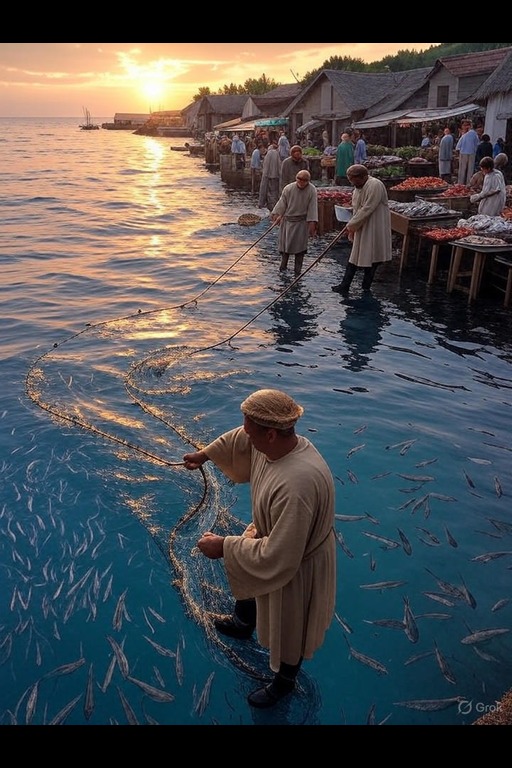
Wild Fish Shoals are natural assemblages of fish found in oceanic waters, thriving in abundance due to favorable environmental conditions. Harvesters depend on their understanding of seasonal patterns and techniques to gather these fish sustainably, ensuring that stocks remain healthy. These shoals play a crucial role in supporting local culinary traditions and facilitating trade within nearby settlements. The presence of reliable fish shoals often influences the development and prosperity of coastal communities.
Universal
Biomes
Politics
Alignments
Races
Resources
Classes
Elevations
Religions
World
No accessible MAPs found.
Biome
Politics
Alignment
Race
Resource
Class
HeightMap
Wild Fish Shoals
Detailed Description
Wild Fish Shoals are dynamic phenomena, often appearing in particular regions where currents converge and nutrient-rich waters foster a diverse aquatic ecosystem. These shoals consist of various species that congregate, drawn by the availability of food and suitable breeding grounds. This natural behavior can be observed most notably during specific seasons, when fish migrate in search of warmer waters or spawning sites. As a result, the timing of harvests becomes essential for those who rely on these resources, as overfishing during peak periods can lead to diminished populations and long-term ecological damage. Understanding these patterns is vital for sustainable practices that allow for continued abundance in the future. The culinary industry heavily benefits from Wild Fish Shoals, as these fish provide a key ingredient in countless dishes enjoyed by communities along coastlines. The versatility of the fish harvested from these shoals lends itself to a variety of preparations, including drying, pickling, and salting, preserving the catch for later consumption. These processed goods are not only staples in local diets but also valuable trade items. Craftspeople and merchants alike take pride in the quality and flavor profiles that these fish can impart, leading to a thriving trade network that connects coastal towns and distant markets. Communities situated near these fish shoals often center their economies around the bounty provided by their waters. The seasonal influx of fish encourages not just fishing but also related industries, such as the production of spices and salts used to enhance the flavor of these catches. The timing of harvests, festivals celebrating the abundance, and the sharing of traditional recipes all contribute to a rich cultural tapestry woven around the existence of these natural resources. Furthermore, the communal efforts to responsibly manage fish stocks reinforce local bonds, ensuring that the resource can sustain generations to come.
Examples
Various products arise from the harvesting of Wild Fish Shoals, including dried fish, which serves as a long-lasting food source, and preserves that capture the freshness of the catch. Trade packs filled with these delicacies often travel far, bringing a taste of the sea to inland areas. Salts and spices created from the fish not only enhance culinary creations but also form an integral part of trade agreements between communities. The variety of products showcases the adaptability and resourcefulness of those who rely on the ocean's bounty.