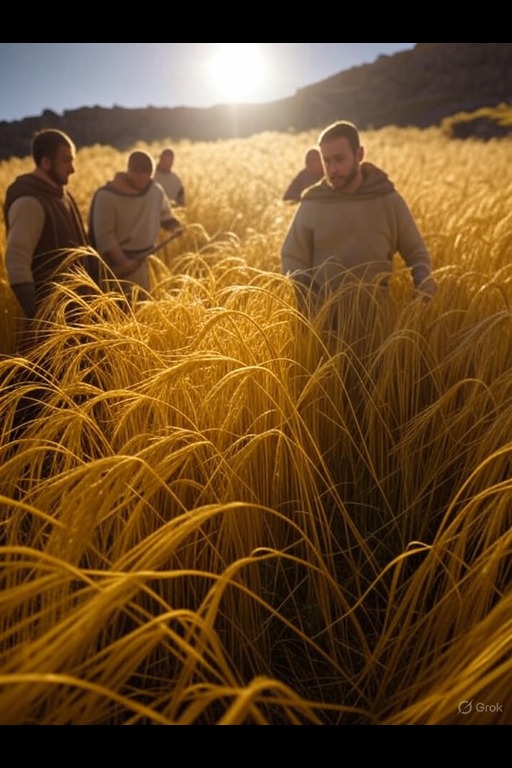
Wild Barley is a resilient grain that flourishes in xeric scrublands and cold deserts, thriving in rocky terrains where few other crops can survive. It plays a vital role in local economies, as harvesters skillfully gather this resource during the peak season to prevent overexploitation. Its versatility supports a variety of culinary applications and trade opportunities, making it a staple for many settlements. The presence of Wild Barley often influences the location of communities that depend on it for sustenance and commerce.
Universal
Biomes
Politics
Alignments
Races
Resources
Classes
Elevations
Religions
World
No accessible MAPs found.
Biome
Politics
Alignment
Race
Resource
Class
HeightMap
Wild Barley
Detailed Description
In the harsh environments of xeric scrublands and cold deserts, Wild Barley stands out as a robust grain that endures extreme conditions. This plant showcases a remarkable adaptability, allowing it to thrive in rocky soils where moisture is scarce. Wild Barley typically develops tufts of slender stalks topped with flowery spikes, which sway in the arid winds. Its roots penetrate deep into the earth, seeking out pockets of moisture, and its foliage provides a striking contrast against the muted palette of its surroundings. Given its hardiness, it is a vital resource for both local wildlife and human inhabitants alike. Harvesting Wild Barley requires a keen awareness of seasonal changes and a deep understanding of the land. Skilled gatherers time their collection with the peak ripeness of the grain, ensuring a bountiful yield while maintaining the sustainability of the wild stocks. This delicate balance is crucial, as overharvesting can lead to diminished supplies and threats to local ecosystems. The grain is often processed into various forms, including dried goods, preserves, and even specialty blends that enhance flavor in culinary dishes. Those who master the harvesting techniques often become pivotal figures in their communities, facilitating trade and sharing knowledge passed down through generations. The economic impact of Wild Barley cannot be understated. Its availability shapes trade routes and community interactions, as settlements near fertile areas benefit from the resource. Farmers and merchants create trade packs filled with this grain, exchanging it for other goods ranging from spices to essential tools. The grain's versatility allows it to be transformed into salts and spices, adding value and attracting traders from distant lands. As such, Wild Barley not only nourishes those who consume it but also supports vibrant local economies, weaving together the fabric of these hardy communities.
Examples
Products derived from Wild Barley showcase its culinary potential and economic importance. Dried goods made from the grain are sought after for their long shelf life and nutritious qualities, often used in various recipes. Preserves crafted from Wild Barley offer a unique flavor profile, appealing to those who appreciate local delicacies. Additionally, trade packs containing this grain facilitate commerce between regions, while salts and spices derived from it enhance the gastronomic offerings of local cuisines. As a result, Wild Barley serves as a cornerstone for sustenance and trade in these remote areas.