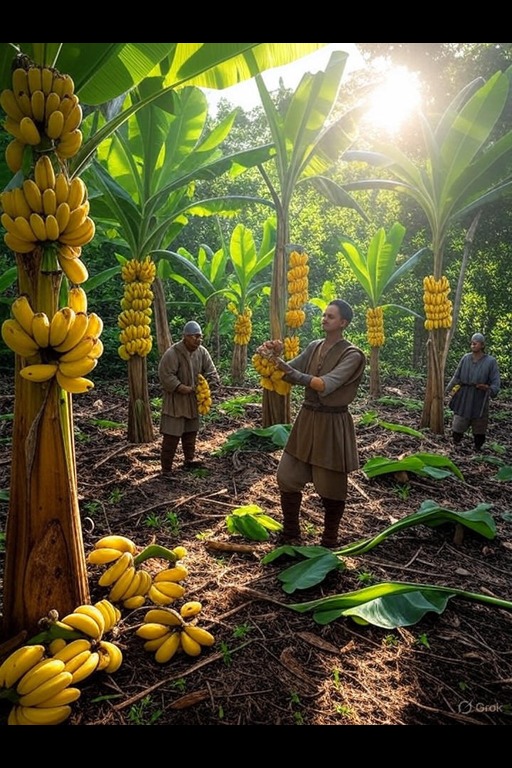
Wild Bananas are a hardy, resilient fruit native to tropical dry forests. Thriving in this unique ecosystem, they provide nourishment and economic support to nearby communities. Harvesters skillfully gather these fruits, balancing the need for sustenance with the importance of sustainable practices. Their versatility lends itself to various industries, enriching local culinary and medicinal traditions.
Universal
Biomes
Politics
Alignments
Races
Resources
Classes
Elevations
Religions
World
No accessible MAPs found.
Biome
Politics
Alignment
Race
Resource
Class
HeightMap
Wild Bananas
Detailed Description
Found in the sun-drenched expanses of tropical dry forests, Wild Bananas flourish in the interplay of sun and shade. These robust plants are well-adapted to cope with the cyclical patterns of rainfall and drought characteristic of their environment. The Wild Banana plants produce elongated, crescent-shaped fruit that is typically larger than cultivated counterparts. Its texture is firm yet creamy, and the flavor varies from mildly sweet to pleasantly tart, depending on the ripeness at harvest. The leaves, broad and lush, are prized for their use in various crafts, while the plant itself serves as a vital resource for those who dwell in its vicinity. Harvesting Wild Bananas requires a delicate balance of timing and technique. Skillful gatherers often wait for the fruit to reach optimal ripeness, which can vary based on seasonal conditions and the individual plant. Those who seek to collect these fruits must be attuned to the rhythms of nature, ensuring that their actions do not deplete stocks or disrupt local ecosystems. Such practices not only help maintain a sustainable supply but also forge a profound connection between the gatherers and the land they tend. The fruits often serve as a staple in local diets and are utilized in various culinary applications, from simple snacks to elaborate dishes. Beyond their culinary use, Wild Bananas play a significant role in traditional medicine. Herbalists utilize different parts of the plant, including the fruit, leaves, and even the roots, to create tinctures and salves believed to address a variety of ailments. The preparation of herbal teas from the dried fruit is a common practice, with many locals believing in their restorative properties. Consequently, Wild Bananas are not just a food source but a vital component of the local economy and culture, forming a bridge between generations through shared knowledge of their uses and benefits. The trade in Wild Bananas extends beyond basic sustenance, contributing to local markets and crafts. Artisans often incorporate the leaves into woven goods, using their flexibility and durability to create functional and decorative items. As settlements often spring up near reliable sources of Wild Bananas, the fruit has become a symbol of community resilience and resourcefulness, binding together those who rely upon it for their livelihoods. The presence of Wild Bananas is, therefore, a testament to the intricate relationships formed in this thriving ecosystem, where every harvest tells a story of balance and respect for nature.
Examples
Examples of products derived from Wild Bananas illustrate its wide-ranging utility. Herbal teas brewed from the dried fruit are popular for their refreshing taste and purported health benefits. Additionally, local herbalists create tinctures and salves from the plant, celebrating its medicinal properties. Dried greens, harvested from the leaves, are often used in culinary preparations or as spice sachets, adding aromatic flavors to dishes. Thus, Wild Bananas significantly enrich both the diet and culture of the communities that cherish them.