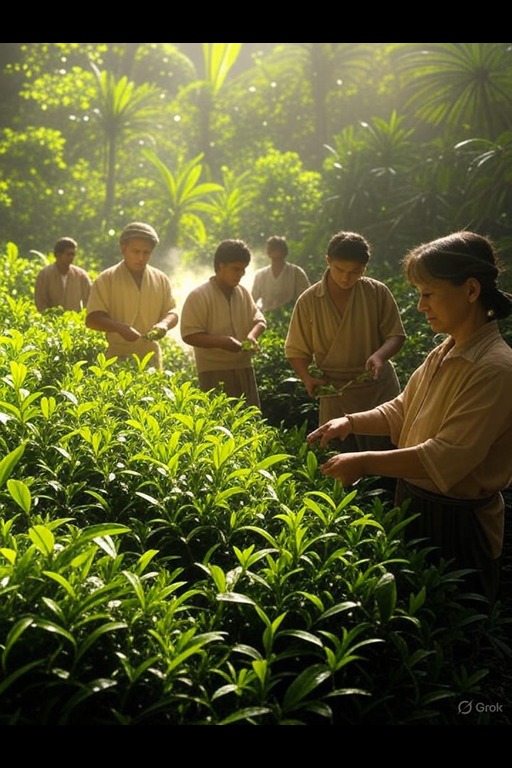
Tea (Highland) is a prized agricultural product cultivated in tropical rainforests. Its growth requires careful attention to the climate, with harvests strategically timed for optimal conditions. After being gathered, the leaves are swiftly processed to preserve their flavor and potency. This resource plays a crucial role in various industries, from food trade to preservation and commerce.
Universal
Biomes
Politics
Alignments
Races
Resources
Classes
Elevations
Religions
World
No accessible MAPs found.
Biome
Politics
Alignment
Race
Resource
Class
HeightMap
Tea (Highland)
Detailed Description
The cultivation of Tea (Highland) thrives in the lush embrace of tropical rainforests, where the rich biodiversity supports the delicate growth of the tea plants. Farmers utilize simple, yet effective tools, relying on their intimate knowledge of the environment to nurture the plants. This meticulous approach is essential, as the tea's quality hinges on the specific conditions under which it is grown. The warmth and humidity of the rainforest create an ideal microclimate, fostering the development of vibrant, aromatic leaves that are renowned for their unique flavors and characteristics. Harvesting occurs during carefully chosen weather windows, when the leaves are at their peak freshness. Farmers often engage in a ritualistic process, ensuring that only the finest leaves are selected. This attention to detail not only enhances the quality of the tea but also strengthens the connection between the cultivators and the land they tend. After gathering, the leaves undergo a swift processing routine to halt oxidation, sealing in their natural essence for later enjoyment. Techniques such as steaming, rolling, and drying are employed, reflecting both tradition and innovation within this agricultural practice. The versatility of Tea (Highland) makes it a valuable commodity across various industries. It serves as a staple in many diets, offering a refreshing beverage enjoyed by individuals from all walks of life. Beyond mere consumption, the leaves are often transformed into preserves, capturing their distinct flavors for long-term enjoyment. In trade, the tea functions not just as a product, but as a symbol of cultural exchange, linking distant communities through shared appreciation and commerce. This multi-faceted nature of Tea (Highland) underscores its significance in both local and broader economies, illustrating how a simple agricultural endeavor can weave itself into the fabric of society. Through its cultivation and trade, Tea (Highland) embodies the relationship between humans and the natural world. As farmers adapt to the rhythms of the rainforest, they become stewards of the land, ensuring the sustainability of this cherished resource for generations to come. The tea stands not only as a drink but as a testament to the harmonious balance between agriculture and ecology, highlighting the importance of mindful practices in the face of changing environmental conditions.
Examples
Tea (Highland) is used to create a variety of staple products, such as refreshing beverages that accompany daily meals. It also finds its way into preserves, where the unique flavors are harnessed to enhance other culinary creations. In trade, the tea acts as a medium of exchange, facilitating relationships between distant communities that value its distinct qualities. The resource also inspires artisanal goods crafted from the leaves, showcasing the creativity of local producers. Overall, Tea (Highland) serves both nutritional and cultural roles, enriching lives through its diverse applications.