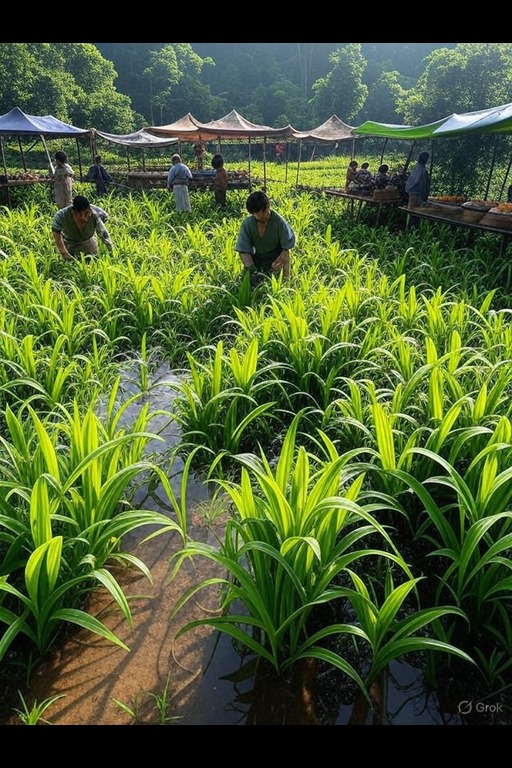
Taro is a staple crop cultivated in tropical wet forests, thriving in the rich, moist soils of these vibrant ecosystems. Its growth is intricately tied to the rhythms of the seasons, with traditional farming practices enhancing both quality and yield. The crop is not only consumed locally but is also traded with neighboring regions, where preserved forms are particularly valued. Caravans often carry preserved Taro for sustenance on long journeys, especially during times when fresh produce is scarce.
Universal
Biomes
Politics
Alignments
Races
Resources
Classes
Elevations
Religions
World
No accessible MAPs found.
Biome
Politics
Alignment
Race
Resource
Class
HeightMap
Taro
Detailed Description
Taro, a root vegetable, is well adapted to the humid conditions found in tropical wet forests and seasonal rainforests. Its cultivation requires careful management of water levels, as it thrives in fields that are periodically flooded. Farmers often utilize terraces or bunds to create optimal growing conditions, ensuring that the plants receive the right amount of moisture while preventing excess water loss. The climate plays an essential role in the growth cycle of Taro, with sunny days and warm temperatures promoting robust growth, while cooler, damp conditions can lead to issues such as rot and disease. Traditional farming methods, passed down through generations, emphasize the importance of soil health and crop rotation, ensuring that Taro remains a sustainable source of nourishment for communities. Taro is harvested at various stages, allowing for a range of culinary applications. Young Taro, known for its tender texture, is often prepared in stews or soups, while mature roots are prized for their starchiness and versatility. Local cuisines feature Taro in numerous forms—boiled, mashed, or even dried into chips for a crunchy snack. Preservation techniques, such as pickling and drying, are employed to extend the shelf life of Taro. These methods allow communities to store the crop for months, ensuring food security during periods of scarcity and providing vital nutrition in the off-season. The demand for preserved Taro products has also led to thriving trade networks, with caravans transporting these delicacies across regions. In addition to its culinary significance, Taro serves as a vital source of livestock feed in agricultural practices. The leaves and stems, often discarded after harvest, are nutrient-rich and can be used to nourish animals, creating a cyclical benefit within farming systems. This resource not only sustains human populations but also supports the wider ecosystem, creating connections between agriculture, trade, and local economies. As a crop that thrives in diverse tropical environments, Taro continues to be a key player in the agricultural landscape, embodying the interwoven relationship between nature and human sustenance.
Examples
Culinary creations using Taro vary widely, showcasing its adaptability in various dishes. Pickled Taro brings a tangy twist to meals, while stewed Taro offers a comforting, hearty option. Dried Taro chips provide a savory snack that is easy to transport, and Taro mash serves as a flavorful base for many recipes. Taro soup, rich and nourishing, highlights the root's unique texture and flavor, making it a beloved staple in many diets.