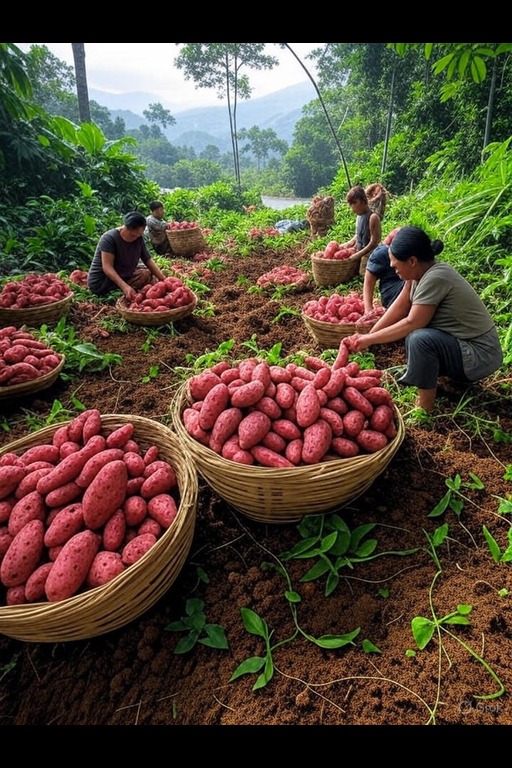
Sweet Potato is a versatile crop cultivated in the open plots of tropical seasonal forests. It thrives in well-drained soils and requires careful attention during its growth cycle to achieve optimal flavor and texture. Harvesting occurs at peak ripeness, ensuring minimal losses due to the region’s fluctuating weather. Immediate processing is essential, as it involves drying, milling, or slicing to prevent spoilage and maintain quality.
Universal
Biomes
Politics
Alignments
Races
Resources
Classes
Elevations
Religions
World
No accessible MAPs found.
Biome
Politics
Alignment
Race
Resource
Class
HeightMap
Sweet Potato
Detailed Description
The cultivation of Sweet Potato benefits from the rich biodiversity found within tropical seasonal forests. These environments provide a suitable climate with warm temperatures and seasonal rainfall that promotes robust growth. Farmers plant the tubers in well-tilled soil, often utilizing traditional techniques to maximize yield. Attention to crop rotation and intercropping can further enhance both the health of the soil and the overall production. Utilizing organic fertilizers derived from local vegetation supports sustainable practices that align with the natural ecological cycles of the forest. Once the Sweet Potatoes reach maturity, timely harvesting becomes critical. Farmers typically assess the tubers' size and skin coloration to determine the optimal harvest time. Gathering the crops promptly helps to minimize losses, as the tubers are susceptible to rot in the humid environment. After harvest, the Sweet Potatoes undergo immediate processing to ensure their quality is preserved. Methods such as drying and milling transform the raw crop into a variety of products, which can be used for culinary or trade purposes. The versatility of Sweet Potato extends beyond its initial uses; it can be transformed into an array of products that cater to diverse culinary traditions. Dried slices serve as nutritious snacks or ingredients for stews, while the starch extracted from the tubers is employed in various food applications. This adaptability makes Sweet Potato a staple in local diets and a valuable commodity in food trade. Preservation techniques, such as dehydration, allow the crop to be stored for extended periods, further enhancing its role as a reliable food source in times of need. The economic impact of Sweet Potato cultivation resonates throughout the agricultural sector, contributing to local livelihoods and markets, as it is in high demand both for consumption and trade. Indeed, the Sweet Potato is more than just a crop; it embodies a connection between the land and those who cultivate it. Farmers often share knowledge and techniques across generations, fostering a sense of community centered around this essential resource. As a result, Sweet Potato stands as a testament to the relationship between nature and agricultural practices, thriving in harmony with the environment while nourishing the many who rely on it.
Examples
Examples of products made from Sweet Potato illustrate its versatility and importance in local cuisines. Dried slices are commonly used in snacks or as ingredients in various dishes, while starch derived from the tubers finds application in baking and cooking. Stews featuring Sweet Potato provide hearty nutrition, often reflecting regional flavors and traditions. Additionally, Sweet Potato is traded as a valuable commodity, facilitating economic exchanges between communities and contributing to local markets.