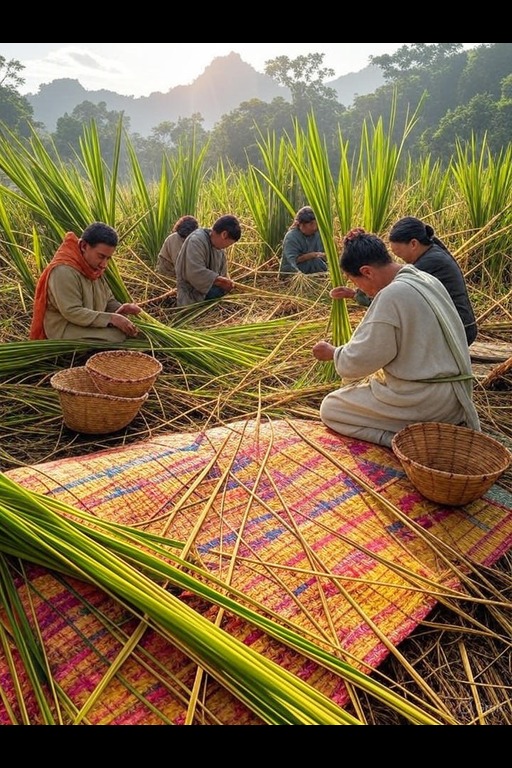
Swamp Reeds thrive in the lush environment of tropical wet forests, forming dense clusters along the water’s edge. Harvesters, skilled in sustainable practices, gather the reeds with care to prevent overexploitation. This versatile resource is integral to local industries such as weaving, thatching, and papermaking. Many settlements benefit from their proximity to abundant stands of these reeds, fostering both craft and trade.
Universal
Biomes
Politics
Alignments
Races
Resources
Classes
Elevations
Religions
World
No accessible MAPs found.
Biome
Politics
Alignment
Race
Resource
Class
HeightMap
Swamp Reeds
Detailed Description
Swamp Reeds are a resilient plant species that flourish in the humid, warm climates of tropical wet forests. Their long, slender stems rise from the shallow waters, forming dense stands that create unique habitats for various local fauna. The reeds possess a fibrous structure that makes them particularly suitable for a multitude of uses, ranging from craft production to construction materials. Harvesting Swamp Reeds requires both skill and timing, as the best quality stems are obtained during specific seasons when the plants are at their strongest and most pliable. Sustainable practices are vital, ensuring that the ecosystem remains balanced and that future generations can continue to rely on this resource. The primary industries that benefit from Swamp Reeds include weaving, thatching, and papermaking. Artisans use the reeds to create intricate woven mats, durable thatch bundles for roofing, and various types of baskets that serve both functional and decorative purposes. In papermaking, the fibrous nature of the reeds lends itself to the creation of lightweight yet sturdy sheets, favored for their unique texture and ability to absorb ink effectively. The versatility of Swamp Reeds not only supports local economies but also nurtures a rich tradition of craftsmanship, where artisans pass down their techniques through generations. Trade in Swamp Reeds flourishes due to their widespread utility and the high demand for quality crafted goods. Markets often feature a variety of items made from these reeds, attracting both local buyers and those from distant communities. As populations grow and the demand for sustainable materials increases, the significance of Swamp Reeds becomes ever more pronounced. Their presence near settlements not only enhances local economies but also fosters a sense of community around shared practices of harvesting and crafting. This interconnectedness is integral to the social fabric, as it promotes collaboration and the sharing of skills among artisans and harvesters alike.
Examples
Common products derived from Swamp Reeds include woven mats that provide both decorative and functional surfaces, as well as thatch bundles used in roofing to offer protection from the elements. Artisans often craft baskets that are lightweight yet durable, perfect for carrying goods or storing items. Papyrus sheets made from the reeds are popular for writing and drawing, while cordage made from the fibrous material serves various practical purposes. These items not only reflect the skill of the creators but also the cultural significance of Swamp Reeds within their communities.