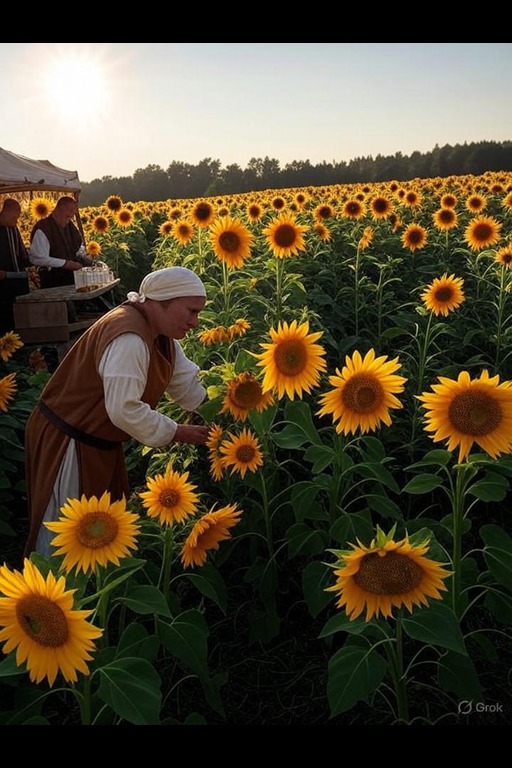
Sunflowers are cultivated extensively in the Temperate dry grassland, where their vibrant blooms are a hallmark of the landscape. The interplay of climate and soil conditions shapes their growth, with traditional farming techniques passed down through generations enhancing their yield. Seasonal fluctuations play a crucial role in determining the quality of the harvest, influencing trade dynamics with neighboring regions. Caravans often transport preserved forms of these plants, ensuring sustenance during long journeys and harsh winters.
Universal
Biomes
Politics
Alignments
Races
Resources
Classes
Elevations
Religions
World
No accessible MAPs found.
Biome
Politics
Alignment
Race
Resource
Class
HeightMap
Sunflowers
Detailed Description
Sunflowers are a staple crop in the Temperate dry grassland, thriving in the warm sun and well-drained soils typical of this biome. Farmers cultivate them not only for their striking flowers but also for their valuable seeds and oil. The cultivation process is deeply interwoven with the rhythm of the seasons, as planting and harvesting times are carefully aligned with climatic patterns. Farmers often employ local knowledge, utilizing time-honored methods to maximize both yield and quality. These techniques vary, reflecting the unique histories and practices of the communities that grow them. The quality of the sunflower harvest can significantly impact local economies, often determining the success of agricultural ventures. Sunflowers are harvested at peak ripeness, when the heads are fully formed and the seeds are plump. After harvesting, the seeds are processed to extract oil, which is prized for its culinary uses, as well as for soapmaking and other industries. In addition to oil, the ground seeds can be transformed into paste or pressed into cakes that serve as nutritious food sources. Such versatility ensures that sunflowers are not merely a crop, but a multifaceted resource that supports various industries. Trade in sunflowers also plays a vital role in the economic landscape, as surpluses are commonly exchanged with neighboring regions. These transactions not only bolster local economies but also foster connections among communities. Caravans frequently carry preserved sunflower products, which are valuable for their long shelf life, making them ideal for transport. These goods provide sustenance during extended travels, as well as a comforting taste of home during the colder months when fresh produce is scarce. Thus, sunflowers symbolize not just agricultural abundance, but also resilience and resourcefulness in the face of seasonal challenges.
Examples
Sunflower oil is a popular choice for cooking, known for its light flavor and high smoke point, making it ideal for various culinary applications. Sunflower paste, crafted from ground seeds, is often used as a nutritious spread or ingredient in savory dishes. Pressed sunflower cakes serve as both a protein-rich food and a valuable livestock feed. Additionally, soaps made from sunflower oil are celebrated for their moisturizing properties and gentle formulation, while sunflower condiments add a delightful flavor to meals, showcasing the crop's versatility in the kitchen.