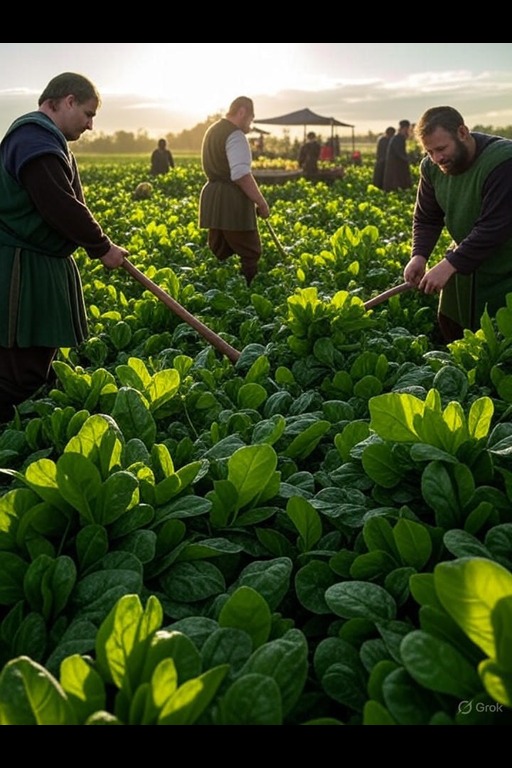
Spinach is a leafy green vegetable that thrives in the temperate wet grassland biome, shaped by the interplay of climate and fertile soils. Its cultivation relies heavily on seasonal methods that directly influence both the quality and yield of the harvest. Surpluses are often traded with neighboring regions, where the demand for fresh produce is high. Caravans frequently prize preserved forms of spinach for long journeys and as staples for winter stores.
Universal
Biomes
Politics
Alignments
Races
Resources
Classes
Elevations
Religions
World
No accessible MAPs found.
Biome
Politics
Alignment
Race
Resource
Class
HeightMap
Spinach
Detailed Description
The cultivation of spinach is closely linked to the climates of temperate wet grasslands, where moisture-rich soils provide the ideal environment for this verdant crop. Farmers typically prepare the land in early spring, ensuring that the soil is well-aerated and enriched with organic matter to promote vigorous growth. As the seasons progress, the spinach develops its characteristic lush leaves, which are sought after for their vibrant color and nutritious properties. Harvesting usually occurs in late spring to early summer, when the leaves are at their peak freshness and flavor, ready to be consumed or processed into various products. The culinary versatility of spinach has made it an essential ingredient in many recipes, ranging from simple salads to complex dishes. It can be served fresh, sautéed, or incorporated into stews, soups, and casseroles. In addition to its fresh form, spinach can also be preserved through drying, fermentation, or candying, each method enhancing its unique qualities. Dried spinach retains much of its nutritional value and is a favored choice for long-term storage, while preserved and fermented varieties offer distinct flavors that appeal to diverse culinary traditions. Trade plays a significant role in the distribution of spinach, with surplus crops often exchanged with nearby regions that may lack sufficient agricultural capacity. This trade not only supports local economies but also fosters a cultural exchange, as different cooking styles and preservation techniques are shared among communities. Caravans transporting preserved spinach across long distances have become a common sight, ensuring that this verdant crop can be enjoyed even far from its place of origin. The adaptability of spinach means that it can be cultivated in various conditions, further solidifying its status as a staple in many diets and an important element of agricultural practice in temperate regions.
Examples
Common products derived from spinach include dried spinach, which retains its nutrients and can be used in soups and stews, as well as preserved spinach, often found in jars or pouches. Fermented spinach, with its tangy flavor, appeals to those seeking unique culinary experiences, while spiced spinach offers a zesty twist that enhances various dishes. Candied spinach, although less common, provides a sweet alternative that showcases the versatility of this leafy green.