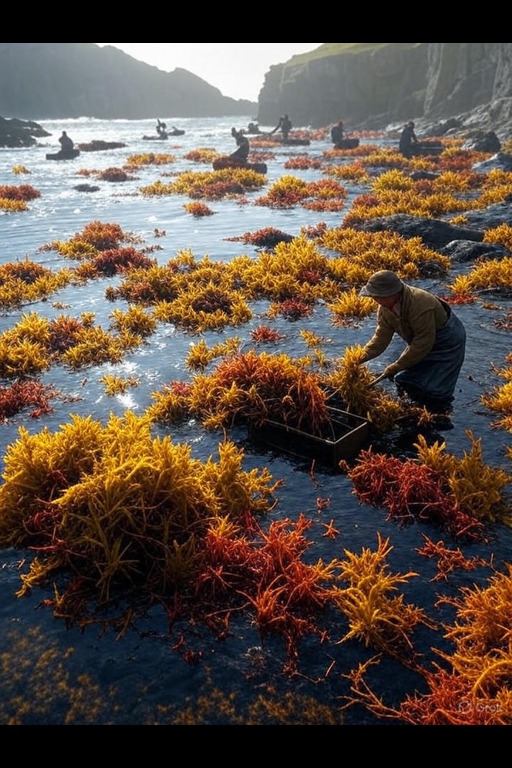
Seaweed is cultivated or harvested in the Tundra, shaped by climate, soils, and tradition. This versatile resource thrives in the frigid waters of the polar regions and is deeply influenced by seasonal changes. Methods of gathering and processing vary, impacting the quality and yield of the harvest. Surpluses are often traded with neighboring regions, while preserved forms are sought after for long journeys and winter stores.
Universal
Biomes
Politics
Alignments
Races
Resources
Classes
Elevations
Religions
World
No accessible MAPs found.
Biome
Politics
Alignment
Race
Resource
Class
HeightMap
Seaweed
Detailed Description
Thriving in the icy embrace of polar seas, seaweed is a remarkable aquatic flora that has adapted to the extreme conditions of tundra and glacial environments. The cultivation and harvesting of seaweed require specialized knowledge, as traditional techniques often dictate the timing and methods used. These methods have evolved to optimize the yield, taking into account the unique seasonal patterns that govern the growth cycles of various species. Harvesters skillfully navigate the waters, employing tools that minimize disruption to the delicate marine ecosystems while maximizing their harvest. The resulting bounty is not only a testament to human ingenuity but also to the resilience of nature in harsh climates. The nutritional benefits of seaweed are well-recognized, offering a wealth of vitamins and minerals. Its culinary applications are diverse; dried seaweed is often transformed into sheets for wrapping other foods, while soups and pickles infused with seaweed deliver rich flavors and textures. Additionally, as a seasoning, it enhances the taste of countless dishes, reflecting the unique maritime essence of the regions from which it originates. The preservation methods employed, such as drying and salting, play a crucial role in extending the shelf life of these products, making them essential staples during the long winters when fresh produce is scarce. Trade networks flourish around this valuable resource, with caravans transporting preserved seaweed across vast distances. These traders understand the intricacies of supply and demand, often anticipating shortages in regions far from the sea. The preserved forms are particularly prized, as they not only provide sustenance but also serve as a reminder of the bountiful coastlines. Whether consumed directly or used as an ingredient in more elaborate dishes, seaweed remains a vital component of both daily sustenance and culinary creativity, bridging the gaps between communities connected by the waters that sustain them.
Examples
A variety of products emerge from the seaweed harvest, each with its unique appeal and utility. Dried seaweed serves as a convenient snack or ingredient, while seaweed sheets are essential for wrapping delicacies. Seaweed soup, rich in flavor, is a hearty dish enjoyed in many regions, often accompanied by pickles for added zest. Seasoning derived from seaweed elevates the taste of various cuisines, showcasing the versatility of this resource. Overall, seaweed stands as a testament to the ingenuity of those who cultivate and utilize it.