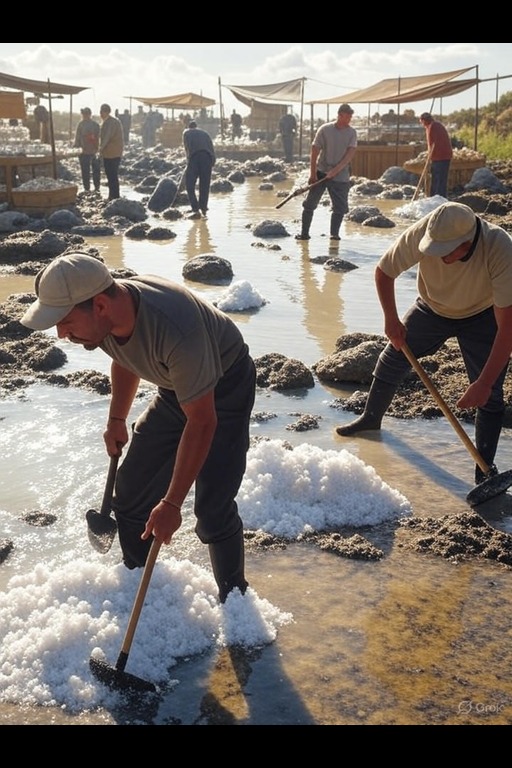
Salt (Marsh) is a vital mineral extracted from the earth, particularly in wetland environments where it forms in abundance. The process of obtaining this mineral involves careful mining techniques, using wedges and hammers to extract it from host rock. Following extraction, tailings are meticulously washed to recover any overlooked pieces, and the shafts are shored for safety. Its applications span across various industries, making it a valuable resource for many different trades.
Universal
Biomes
Politics
Alignments
Races
Resources
Classes
Elevations
Religions
World
No accessible MAPs found.
Biome
Politics
Alignment
Race
Resource
Class
HeightMap
Salt (Marsh)
Detailed Description
The extraction of salt from marshy regions is a practice steeped in tradition and skill. Miners approach the task with a combination of knowledge and caution, as the terrain can often be unpredictable. Utilizing simple yet effective tools, they carefully pry the salt from the surrounding rock formations. This process demands both strength and precision, as a miscalculation can lead to the loss of precious material or, worse, personal injury. Once the salt has been liberated, the next step involves washing the tailings thoroughly. This step is crucial, as it ensures that any overlooked fragments are salvaged, thus maximizing yield from the mine. The remnants of this process, known as tailings, often hold hidden treasures that might otherwise go unnoticed by a less diligent miner. The shoring of the shaft is equally important, providing not only a safe working environment but also a means to facilitate ongoing access to the valuable resource below the earth's surface. Proper safety measures are paramount in this endeavor, as the risks associated with mining in such environments can be considerable. Salt (Marsh) finds its applications in an array of industries, each benefiting from the mineral's unique properties. In construction, it serves as an essential component in various building materials, enhancing their durability and integrity. Toolmakers appreciate its use in the creation of high-quality tools, adding resilience and functionality to their designs. Additionally, the salt is transformed into trade goods, facilitating commerce and exchange between communities. Ornamental crafts also utilize this mineral, with artisans shaping it into beautiful pieces that reflect both the natural beauty of the resource and the skill of the creator. These products range from practical to decorative, demonstrating the versatility of salt beyond mere sustenance. The trade of salt, with its deep-rooted history, continues to forge connections between regions and cultures, emphasizing the mineral's enduring importance in society. In summary, Salt (Marsh) is a mineral of significant importance, mined from wetland areas with care and expertise. Its extraction process, though straightforward, requires a deep understanding of the environment and the materials involved. With a broad spectrum of uses across various industries, salt remains a cornerstone resource that supports both practical applications and artistic endeavors. Within the realm of trade, the value of this mineral endures, linking distant lands through commerce and shared reliance on this essential substance.
Examples
Common products derived from Salt (Marsh) include blocks and aggregates used in construction projects, as well as tools crafted for various trades. The trade goods fashioned from this mineral facilitate commerce and strengthen economic ties between communities. Ornamental pieces, reflecting the beauty of the mineral, are also created, showcasing both craftsmanship and the inherent allure of salt. In every form, the versatility of Salt (Marsh) underscores its integral role in daily life and industry.