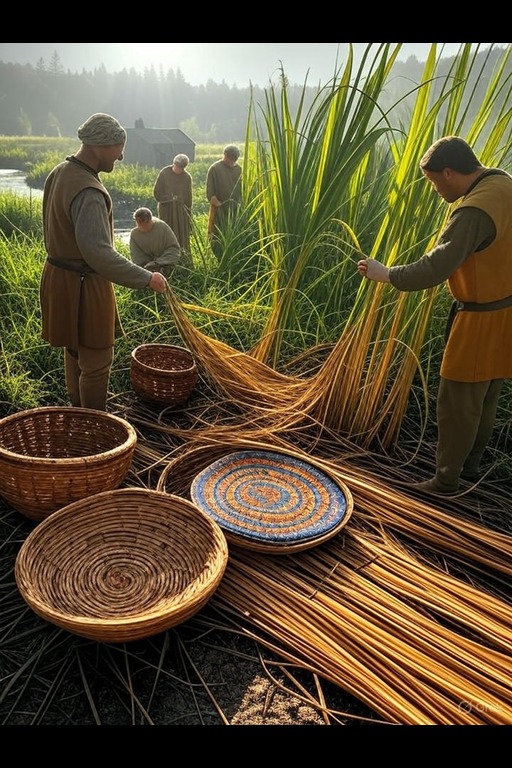
Rushes are hardy, tall plants commonly found in wetland environments. Once harvested, they are cut, dried, and stripped into manageable lengths for various applications. These versatile materials are used in a range of crafts, including weaving and basketry, as well as for producing durable cordage. When bundled tightly and kept off damp ground, rushes can be stored effectively, preventing spoilage and mold growth.
Universal
Biomes
Politics
Alignments
Races
Resources
Classes
Elevations
Religions
World
No accessible MAPs found.
Biome
Politics
Alignment
Race
Resource
Class
HeightMap
Rushes
Detailed Description
Rushes thrive in marshy areas, where their robust stems rise above the waterline, swaying gently in the breeze. The plants are characterized by their long, slender leaves and hollow stems, which lend themselves to a variety of practical uses. As they are harvested, artisans carefully select the finest specimens, ensuring that the rushes are free from blemishes or rot. After cutting, the rushes are dried to preserve their integrity, allowing them to be shaped and manipulated into various forms. This process transforms the raw plant material into a resource ready for crafting. In industries such as weaving and basketry, rushes serve as an essential component. Skilled craftspeople incorporate the pliable strands into intricate designs, creating functional items that often also hold aesthetic value. Baskets and mats fashioned from rushes exhibit not only durability but also a natural beauty that is appreciated by both users and collectors. Additionally, the fibrous nature of rushes makes them suitable for cordage, providing strength and resilience in ropes and twine used for various purposes. Trade is another significant aspect of rushes, as their lightweight and versatile nature makes them easy to transport. Artisans and traders often exchange these products in marketplaces, where the appeal of handcrafted goods attracts a wide array of customers. The sustainability of rushes also enhances their market value, as they can be harvested without causing significant harm to their wetland habitats. As a result, the economic importance of rushes extends beyond mere crafting; it supports entire communities engaged in their production and sale.
Examples
Common products crafted from rushes include baskets used for storage and transport, as well as mats that provide comfort and insulation when placed on the ground. The strength of rush fibers lends itself well to creating robust ropes and twine, which are invaluable in numerous applications, from fishing to construction. Thatches made from rushes serve as natural roofing materials, offering both insulation and a rustic aesthetic. Additionally, rushes find their place in the trade of artisanal goods, with unique items fetching higher prices due to their handmade quality.