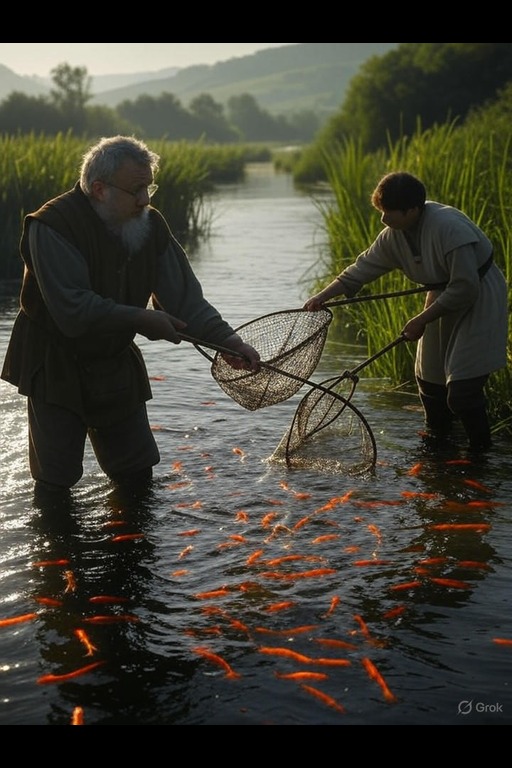
River Fish (Wild) are a crucial resource harvested from the teeming waters of wetland ecosystems. These fish are typically gathered using rudimentary tools and techniques, reflecting the practices of those who live in proximity to such rich environments. Skilled gatherers discern the healthiest specimens, ensuring that only the finest are retained for various uses. The remainder of the catch is returned to the aquatic habitat, allowing the ecosystem to thrive sustainably.
Universal
Biomes
Politics
Alignments
Races
Resources
Classes
Elevations
Religions
World
No accessible MAPs found.
Biome
Politics
Alignment
Race
Resource
Class
HeightMap
River Fish (Wild)
Detailed Description
In the heart of lush wetland areas, River Fish (Wild) serve as a vital resource for communities that depend on the bounty of freshwater ecosystems. These fish, characterized by their adaptability to various aquatic conditions, flourish in the intricate web of life found in marshes, swamps, and riverbanks. Gatherers often venture out at dawn or dusk when the fish are most active, employing simple nets and traps to capture them in small quantities. This method promotes an ethical approach to fishing; only the most vigorous specimens are selected while ensuring minimal disturbance to the surrounding habitat. The preparation of River Fish (Wild) is a communal activity, often involving sorting, cleaning, and preserving the catch at the water's edge. Gatherers employ various techniques to ensure the fish remain fresh, using natural preservatives derived from local flora or methods such as smoking over wood fires. Beyond sustenance, the fish hold significant value for their multiple applications in crafting and trade. Their scales may be used in decorative items, while bones can serve as materials for tools or crafting implements. In addition to their practical uses, River Fish (Wild) play a role in the economy of the region, fostering trade networks that connect diverse communities. Marketplaces near waterways buzz with activity as vendors showcase the day’s catch, drawing in traders from afar eager to exchange goods. The fish also serve as a bartering tool, enabling the acquisition of other essential items such as agricultural produce or crafted goods. Thus, they contribute not only to individual households but to the broader economic landscape. Moreover, the sustainability of River Fish (Wild) is crucial for the health of wetland ecosystems. The careful practice of gathering ensures that populations are not depleted, with many communities adhering to seasonal fishing practices that allow fish stocks to replenish. This approach nurtures a kinship with nature, emphasizing the importance of balance and respect for natural resources. As such, River Fish (Wild) exemplify the intricate relationship between humans and their environment, underscoring the necessity of sustainable practices for future generations.
Examples
Common products derived from River Fish (Wild) include a variety of craft goods and building materials. The flesh is often consumed fresh, dried, or smoked, providing nourishment and flavor to local diets. Additionally, the bones and scales are repurposed into tools and art, reflecting the resourcefulness of those who gather them. Trade goods made from River Fish (Wild) can circulate widely, enhancing both local economies and cultural exchanges.