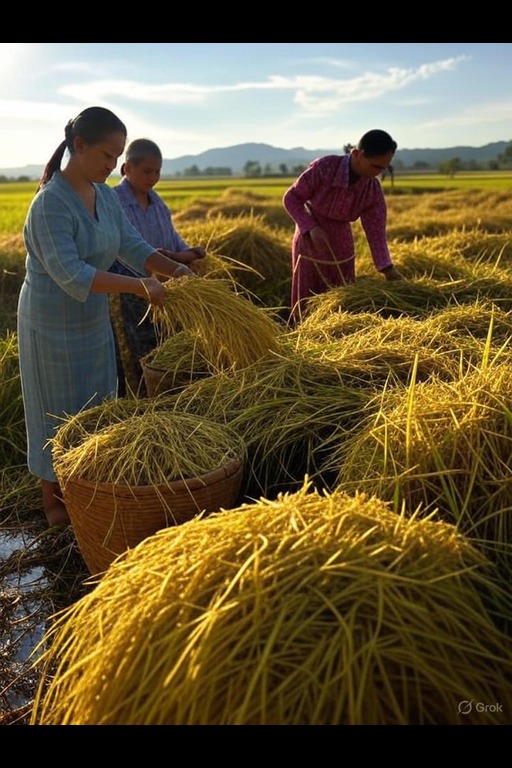
Rice is a vital agricultural resource cultivated primarily in regions characterized by seasonal rainfall and rich, fertile soils. This grain thrives in warm, humid environments, demanding careful management by farmers as they contend with the challenges posed by rot, pests, and intense heat. The cultivation process is labor-intensive and deeply tied to the rhythm of the seasons, making each harvest a significant endeavor. Beyond its role as a staple food, rice’s versatility finds use in various industries, enriching both diets and economies alike.
Universal
Biomes
Politics
Alignments
Races
Resources
Classes
Elevations
Religions
World
No accessible MAPs found.
Biome
Politics
Alignment
Race
Resource
Class
HeightMap
Rice
Detailed Description
The cultivation of rice is an intricate process that begins with selecting the right seeds suited for the local environment. Farmers prepare flooded fields, known as paddies, that provide the necessary water levels for seedlings to flourish. These fields are typically tilled and fertilized to ensure optimal growth, leveraging the rich nutrients found in the soil of seasonal and tropical rainforests. As the plants develop, they require vigilant care; farmers monitor for pests and diseases that threaten the crop, employing traditional and modern methods to protect their harvests. The heavy rains that characterize these biomes play a crucial role, but ample drainage is equally important to prevent rot and ensure the health of the rice plants. As the plants grow tall and the harvest season approaches, the anticipation builds. Harvesting rice is a communal activity, often involving families and neighbors working together to gather the ripe grains before adverse weather can spoil the yield. Once harvested, the grains undergo processing, which includes drying, milling, and storage to prepare them for consumption or trade. The final product is utilized in a myriad of ways, from staple foods that form the base of daily meals to beverages and preserved goods that can be traded for other resources. The versatility of rice is reflected in its myriad forms, inspiring culinary traditions and economic practices. Rice also plays a role in local medicine, with various parts of the plant used in traditional remedies. The husks and bran, often discarded, can be repurposed for medicinal concoctions or as animal feed, showcasing the resource’s sustainability. Beyond its practical uses, rice holds cultural significance, often symbolizing prosperity and nourishment in many societies. As a global commodity, it is traded across vast distances, linking regions and fostering economic interdependence. The cultivation of rice not only sustains livelihoods but also shapes the very landscapes and communities in which it is grown.
Examples
The culinary applications of rice are diverse, ranging from simple boiled grains served alongside various dishes to elaborate preparations like risottos and paellas. In the realm of beverages, rice is transformed into refreshing drinks and fermented products, illustrating its adaptability in food science. Additionally, rice's nature allows it to be preserved in various forms, from dried grains to rice cakes, ensuring its availability year-round. Its medicinal properties have led to the development of herbal remedies, drawing on the grain's nutritional benefits. As a trade staple, rice often finds its way into markets, contributing to the local and regional economies.