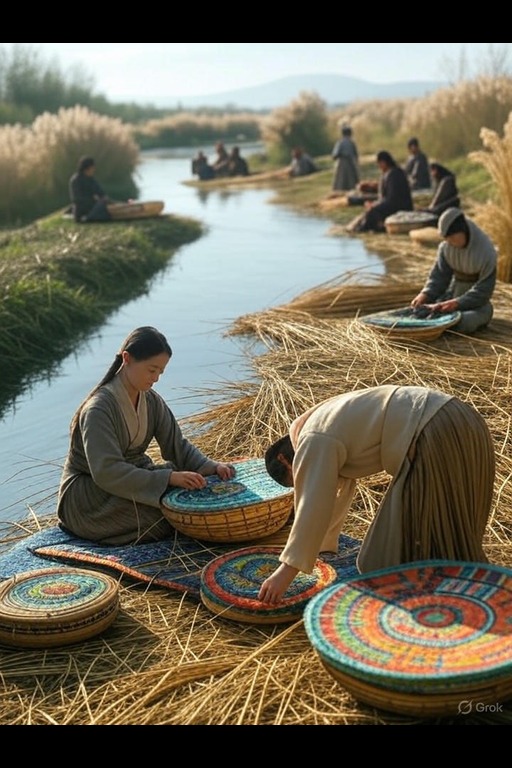
Reed (Streamside) is a versatile resource found along the banks of freshwater bodies. It is harvested, dried, and cut into manageable lengths, ready for various applications. Bundles are carefully secured and elevated from the ground to avoid dampness and subsequent mold growth. This hardy plant serves multiple industries, particularly in weaving, basketry, and cordage manufacturing.
Universal
Biomes
Politics
Alignments
Races
Resources
Classes
Elevations
Religions
World
No accessible MAPs found.
Biome
Politics
Alignment
Race
Resource
Class
HeightMap
Reed (Streamside)
Detailed Description
In grassland biomes, Reed (Streamside) flourishes in the moist and fertile conditions created by nearby waterways. Its tall, slender stalks, often swaying gently in the breeze, are easily recognized by their characteristic feathery tops. Harvesting involves cutting the reeds with precision to ensure the stalks remain intact, which allows for maximum utilization. Once gathered, the reeds are dried under the sun, a critical step that enhances their durability and flexibility for future use. Stripping them into workable lengths is often performed with care to maintain the integrity of the fibers, which are crucial when crafting various items. The utility of Reed (Streamside) extends to several industries, where it is celebrated for its strength and lightweight nature. In weaving, artisans create intricate mats and baskets, utilizing the plant's pliable qualities to form sturdy yet aesthetically pleasing items. These woven goods are not only functional but often carry cultural significance, reflecting the craftsmanship and artistry of their creators. Additionally, the production of cordage, ranging from ropes to twine, benefits from the robust fibers of the reeds, which are twisted and braided to yield strong strands capable of bearing significant weight. In the realm of trade, Reed (Streamside) is highly valued. Merchants transport bundles to distant markets, where they are exchanged for other goods. Its abundance in certain regions makes it a staple item, but its quality can vary based on the habitat in which it grows. As such, artisans and traders alike are keenly aware of the characteristics that distinguish superior reeds from their lesser counterparts. Moreover, the ecological role of reeds cannot be overlooked, as they contribute to the stabilization of riverbanks, preventing erosion and providing habitat for various creatures. The balance of harvesting practices with environmental stewardship is essential for sustainable use, ensuring that both the resource and the ecosystems it supports are preserved for generations to come.
Examples
Products made from Reed (Streamside) are numerous and diverse. Baskets and mats constructed from these reeds serve practical purposes in everyday life, often doubling as decorative items. Rope and twine made from the sturdy fibers are invaluable for a range of activities, from fishing to construction. Additionally, thatch created from dried reeds provides effective roofing material, showcasing the resource's versatility in both functional and aesthetic applications.