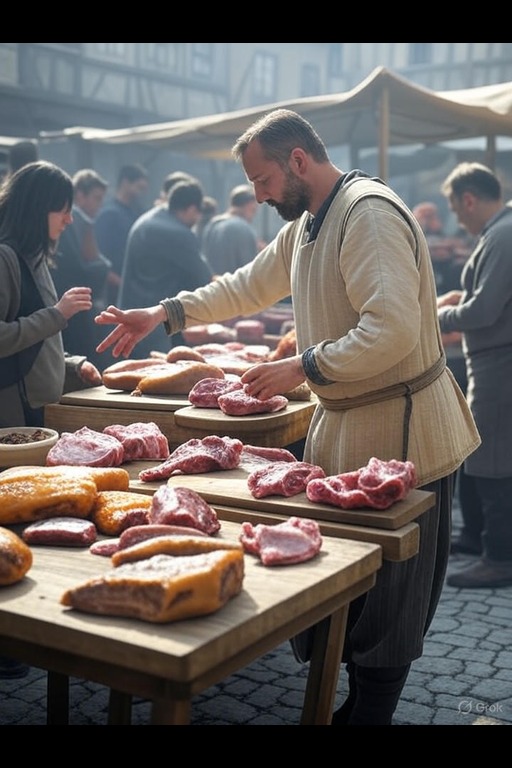
Pork is a vital resource cultivated in the expansive Temperate dry grassland. Its quality and yield are significantly influenced by local climate conditions, soil types, and traditional farming practices. Seasonal variations dictate harvesting methods, contributing to the distinctiveness of the meat. Surpluses are often traded with neighboring regions, where preserved forms are especially prized for their durability and flavor in long journeys and winter stores.
Universal
Biomes
Politics
Alignments
Races
Resources
Classes
Elevations
Religions
World
No accessible MAPs found.
Biome
Politics
Alignment
Race
Resource
Class
HeightMap
Pork
Detailed Description
Pork is derived from domesticated swine, which thrive in the rolling expanses and rich soils of the Temperate dry grassland. Here, farmers engage in animal husbandry, focusing on nurturing healthy livestock that can adapt to the seasonal shifts characteristic of this biome. The diet of the pigs, often supplemented by grains and foraged vegetation, plays a critical role in the flavor and texture of the meat. Traditional methods of raising these animals, passed down through generations, often incorporate sustainable practices that respect the delicate balance of the local ecosystem. Harvesting pork typically aligns with the rhythms of the seasons, with certain times of year marking optimal periods for butchering. During warmer months, the animals feed on plentiful grasses, leading to a richer taste. In contrast, colder seasons often prompt farmers to employ methods of preservation, such as curing or smoking, allowing them to extend the meat's shelf life. These time-honored techniques not only enhance the flavor but also allow communities to store provisions for months when fresh meat is scarce. Trade in pork is a crucial economic activity, with many regions relying on this resource as a staple in their diets. Caravans laden with preserved pork travel across vast distances, connecting disparate communities and fostering interregional relationships. In markets, various forms of pork are available, from fresh cuts that draw the attention of local chefs to cured and smoked varieties that appeal to those seeking robust flavors and longevity. Seasonal festivals often celebrate the harvest, showcasing the versatility of pork in recipes ranging from hearty stews to delicate broths, further embedding this resource into the cultural fabric of the surrounding communities.
Examples
Common products derived from pork highlight its culinary versatility. Smoked pork serves as a favorite choice for long journeys, while fresh cuts are often enjoyed during seasonal feasts. Cured pork, prepared with herbs and spices, offers a celebrated delicacy that enhances communal gatherings. Additionally, dishes such as pork stew and pork broth showcase the meat's ability to absorb and complement a variety of flavors, making it a cherished resource in many kitchens.