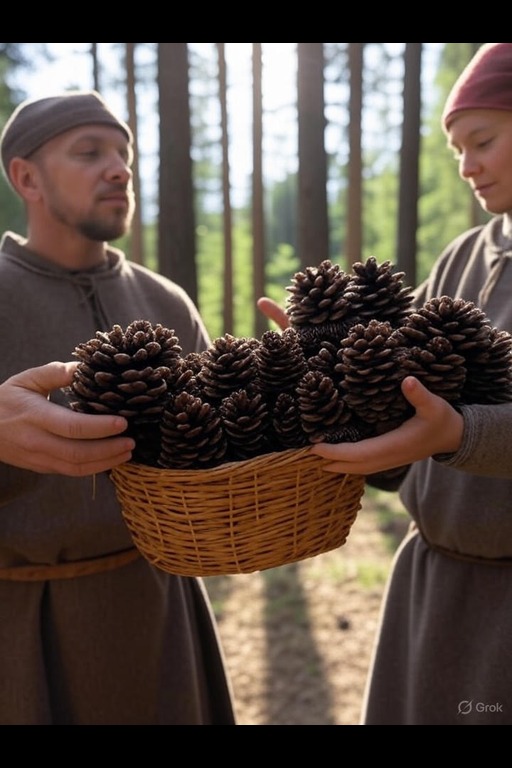
Pine Cones (Edible) are gathered primarily in the expansive reaches of the taiga biome, where towering coniferous trees thrive. These nutrient-rich cones serve as a valuable resource for various trades, including crafting and construction. Gatherers carefully select only the soundest specimens, discarding any that do not meet the natural standards of quality. This practice not only supports local economies but also ensures that the ecosystem remains balanced and productive.
Universal
Biomes
Politics
Alignments
Races
Resources
Classes
Elevations
Religions
World
No accessible MAPs found.
Biome
Politics
Alignment
Race
Resource
Class
HeightMap
Pine Cones (Edible)
Detailed Description
The gathering of Pine Cones (Edible) is an age-old practice rooted in the symbiotic relationship between inhabitants of the taiga and their environment. These cones, a product of towering conifers, contain seeds that are packed with nutrition, making them a vital food source for both wildlife and humanoid populations. The collection process is straightforward, requiring minimal tools. Gatherers venture into the dense forests with sturdy baskets to collect the cones, which can be found scattered beneath the trees or clinging to branches. Attention is given to selecting only the best specimens—those that are firm and free from damage—to ensure that the gathered cones remain fresh and viable for consumption or trade. Any cones that do not pass inspection are left to decompose naturally, returning nutrients to the soil and supporting the ecosystem's health. This sustainable practice reflects a deep respect for nature, as gatherers understand the importance of balance in their surroundings. In addition to their nutritional benefits, Pine Cones are versatile in their applications across various industries. In crafting, they can be transformed into decorative items or functional tools, showcasing the creativity of artisans who work with natural resources. Their sturdy construction also makes them suitable for construction purposes, often serving as natural building materials that blend seamlessly into rustic architectures. In trade, Pine Cones hold value as commodities that can be exchanged for other goods, bolstering local economies and encouraging inter-community relationships. The ability to transport these cones with relative ease allows for their distribution across vast distances, further enhancing their significance in regional markets. The utility of Pine Cones extends beyond mere sustenance; they play a crucial role in the cultural and economic tapestry of taiga communities. They are often featured in local folklore, symbolizing resilience and adaptability. Through generations, knowledge of the best harvesting practices has been passed down, ensuring that each new gathering season is met with enthusiasm and respect for tradition. As the seasons change and the forest remains ever dynamic, the gathering of Pine Cones continues to embody a deep connection to the land, a testament to the enduring bond between nature and those who rely on it for their livelihoods.
Examples
Various products arise from the processing of Pine Cones (Edible), showcasing their versatility. Crafted goods may include decorative items like wreaths or natural ornaments, appealing to those who appreciate rural aesthetics. Additionally, the cones serve as building materials, with sturdy constructions that reflect local architectural styles. On the trade front, they are exchanged for other essentials, enriching the lives of those who partake in such commerce. Tools fashioned from Pine Cones may also find their way into the hands of artisans, further highlighting the resource's significance.