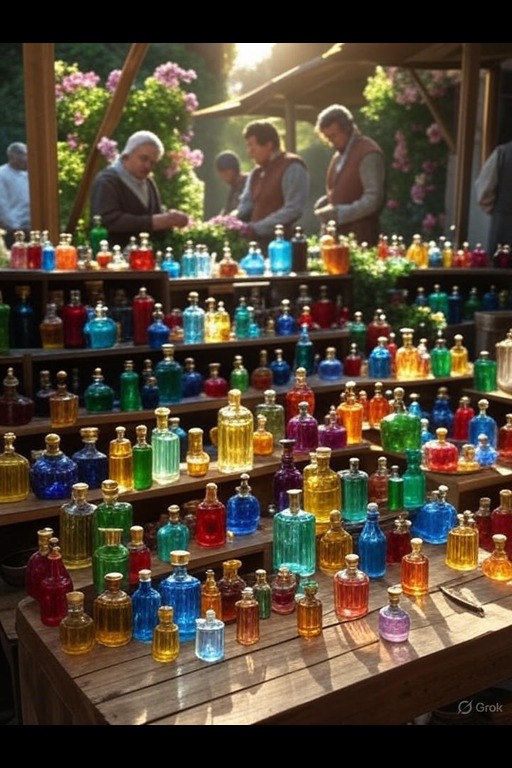
Perfume oils are exquisite aromatic compounds derived from the flora of expansive grasslands and diverse forests. These oils are meticulously crafted by skilled artisans who extract fragrances from local plants, often in proximity to migratory herds. Highly sought after, they hold significant value in trade, especially in bustling hubs that specialize in quality assurance and safe transportation. Their allure extends to various industries, enriching culinary creations and enhancing ceremonial practices.
Universal
Biomes
Politics
Alignments
Races
Resources
Classes
Elevations
Religions
World
No accessible MAPs found.
Biome
Politics
Alignment
Race
Resource
Class
HeightMap
Perfume Oils
Detailed Description
The essence of perfume oils lies in their rich, complex aromas, which are carefully extracted from flowers, leaves, and other plant materials. Regions characterized by open grasslands and seasonal migrations provide a unique biodiversity, contributing to the distinct profiles of these oils. Artisans often employ traditional methods of extraction, such as cold pressing or steam distillation, to preserve the integrity of the fragrances. These practices require a deep understanding of the flora, as well as a keen sense of timing, as the aromatic qualities of plants can change significantly with the seasons. In bustling marketplaces, the perfume oils command attention, with merchants displaying a variety of blends that appeal to both local tastes and foreign demands. Each bottle of perfume oil encapsulates the spirit of its origin, offering a sensory experience that transports users to the landscapes from which it came. The oils are not merely for personal adornment; they are integral to culinary innovations, where a few drops can elevate a dish, infusing it with aromatic complexity. In brewing, they impart unique flavors that can define a beverage, while in the realm of perfumery, they serve as the foundation for exquisite scents that grace the skin. The oils also find a sacred purpose in religious goods, often used in rituals to enhance ambiance and evoke spiritual connections. Trade routes flourish as artisans and merchants navigate the challenges of transporting these delicate oils across vast distances. Careful packaging and expert knowledge of storage conditions are vital to ensure the oils retain their quality during transit. Quality grading plays a crucial role in this industry, with specific characteristics determining the value and desirability of each oil. In trade hubs, buyers can expect a rich tapestry of options, with some oils being prized for their rarity and others sought after for their versatility. This vibrant exchange fosters economic growth and sustains local communities, as the art of perfume oil production continues to thrive amidst changing landscapes and evolving tastes.
Examples
Perfume oils can be found in various forms, each catering to different applications. Perfume oils glaze adds a fragrant sheen to pastries, while perfume oils liqueur enhances the flavor profile of beverages with subtle aromatic notes. Additionally, perfume oils preserves infuse fruits with rich scents, creating delectable treats. Incense made from these oils enriches spaces, transforming ordinary environments into sensory sanctuaries. Such diverse uses underscore the multifaceted nature of perfume oils within both cultural and commercial spheres.