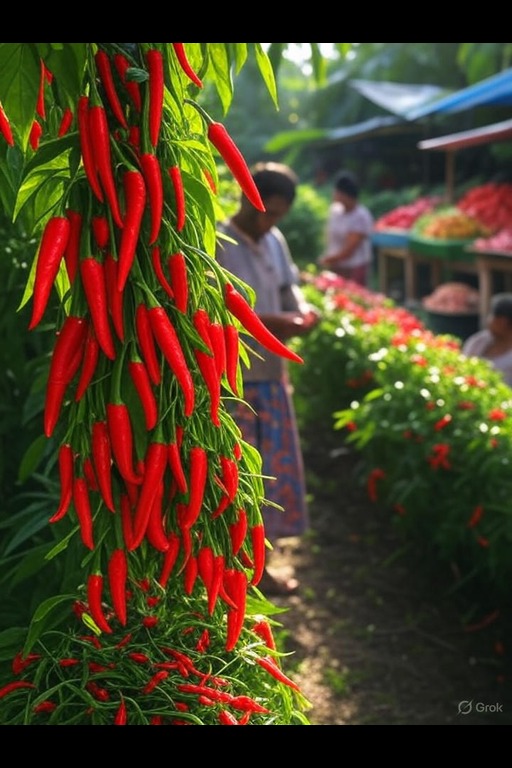
Peppers are a vibrant agricultural resource cultivated in a variety of biomes, including hot deserts and tropical forests. Their cultivation is deeply influenced by local climate and soil conditions, alongside the traditional practices of those who farm them. Seasonal variations dictate the quality and yield, with surpluses often traded with neighboring regions. The versatility of peppers makes them a valuable commodity, particularly in their preserved forms for long journeys or seasonal storage.
Universal
Biomes
Politics
Alignments
Races
Resources
Classes
Elevations
Religions
World
No accessible MAPs found.
Biome
Politics
Alignment
Race
Resource
Class
HeightMap
Peppers
Detailed Description
Peppers thrive in arid and semi-arid environments, flourishing in the intense sunlight and warmth of hot deserts and xeric scrublands. These environments provide the necessary conditions for their growth, creating a striking contrast against the typically dry backdrop. Farmers have developed a variety of techniques to cultivate peppers, adapting to the whims of the season and leveraging the unique characteristics of their soils. Through careful planning and harvest timing, they maximize yield and quality, ensuring that every crop is both flavorful and marketable. The cultivation of peppers is not merely an agricultural endeavor; it is intertwined with the very culture of those who grow them. Traditional methods often include hand-picking to ensure that only the ripest and most robust fruits are harvested. This labor-intensive process reflects a deep respect for the land and the plants, as well as an understanding of the delicate balance required to nourish and protect the crops. As these farmers pass down their knowledge through generations, the art of pepper cultivation becomes a cherished aspect of their identity, shaping local customs and culinary practices. Peppers are often transformed into a range of products, broadening their appeal and usability. They may be dried to concentrate their flavors, preserved in various forms for lasting enjoyment, or fermented to create tangy concoctions that enhance dishes. Spiced peppers are commonly used to impart heat and flavor to meals, while candied varieties offer a unique treat that captures their essence in a sweet form. Each preparation reflects the creativity of the region's culinary traditions, inviting exploration and experimentation in cooking. The trade of these diverse pepper products plays a significant role in local economies, bolstering connections between communities and fostering a vibrant exchange of goods. The thriving market for preserved peppers is particularly noteworthy, as caravans and merchants seek these durable products for long voyages or to prepare for harsher seasons. They provide sustenance and flavor, helping to bridge the gaps between harvests. As such, peppers serve as not only a vital resource for nourishment but also as a symbol of resilience and adaptability in the face of environmental challenges.
Examples
Dried peppers are frequently used in many dishes, adding a concentrated burst of flavor and heat. Preserved peppers can be found in jars, infused with oils and spices, ready to enhance a variety of meals. Fermented peppers yield a unique tanginess, often accompanying rich stews and meats, while spiced versions can elevate simple fare to extraordinary culinary experiences. Candied peppers present a delightful sweetness, enjoyed as snacks or as ingredients in desserts. Each form of pepper showcases the resource's versatility and integral role in the cuisine of the region.