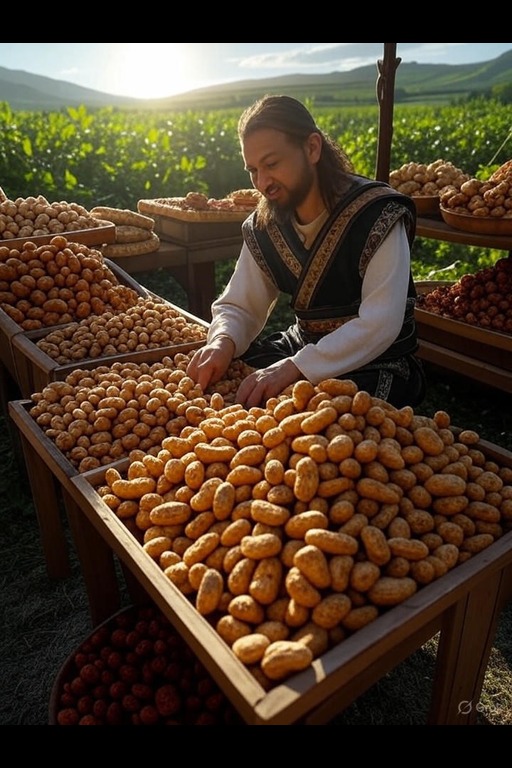
Peanuts are a versatile legume cultivated in warm climates, particularly within savannas and tropical seasonal forests. Their growth is closely tied to the local climate and soil conditions, requiring specific seasonal practices for optimal yield. Farmers often engage in traditional methods that enhance both the quality and quantity of the harvest. Surpluses frequently find their way to neighboring regions through bustling trade routes, where preserved forms are especially valued for long journeys and seasonal storage.
Universal
Biomes
Politics
Alignments
Races
Resources
Classes
Elevations
Religions
World
No accessible MAPs found.
Biome
Politics
Alignment
Race
Resource
Class
HeightMap
Peanuts
Detailed Description
The cultivation of peanuts thrives in specific ecological zones characterized by warmth and distinct wet and dry seasons. These legumes benefit from well-drained, sandy soils that allow their deep roots to anchor effectively while absorbing moisture and nutrients. Farmers often employ crop rotations and intercropping techniques to enhance soil fertility and manage pests, reflecting a deep understanding of both the land and the natural cycles of growth. Local traditions play a significant role in peanut farming, with generations passing down knowledge on planting times, harvesting methods, and post-harvest processing. Peanuts are harvested when their leaves begin to yellow, indicating that the pods are mature. Farmers carefully dig them up, ensuring minimal damage to the delicate shells. The harvest is typically a communal affair, with families and neighbors gathering to assist in collecting and preparing the crop for sale or storage. Once harvested, peanuts are often cleaned and dried to prevent spoilage, and they may be sold fresh, roasted, or ground into various products. The versatility of peanuts allows them to be transformed into oils, pastes, and condiments, which are staples in many culinary traditions. Beyond culinary uses, peanuts find application in various industries, notably oil pressing and soapmaking. The oil extracted from peanuts is prized for its high smoke point and rich flavor, making it a preferred choice for cooking and frying. Additionally, pressed peanut cakes serve as a nutritious livestock feed, contributing to local agriculture. Soap artisans utilize peanut oil for its moisturizing properties, incorporating it into their formulations to create gentle, cleansing products. The trade of peanuts and their byproducts plays a vital role in local economies, fostering connections between farming communities and urban centers as caravans transport these valuable resources across distances.
Examples
Common products derived from peanuts include oils, pastes, and various condiments that enhance flavor in numerous dishes. Peanut oil is often sought after for its culinary properties and is favored for frying due to its high smoke point. Additionally, ground peanut paste serves as a key ingredient in many recipes, while pressed cakes offer nutritional value for livestock. The soap industry also embraces peanuts, producing cleansers that nourish the skin with their natural oils. Each of these products underscores the importance of peanuts in both everyday life and trade.