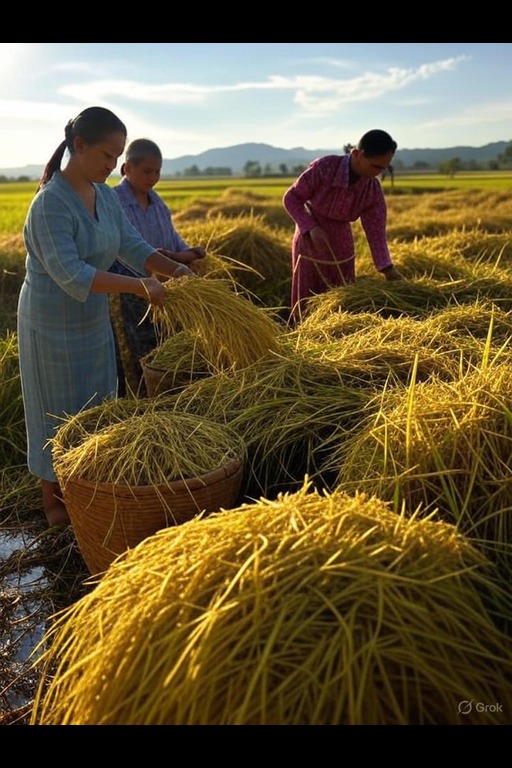
Paddy Rice is a staple crop cultivated in carefully managed wetland plots, known for its adaptability to diverse climates. Harvesting occurs at a precise moment of ripeness, ensuring optimal quality and minimal loss. The processing of this grain begins immediately after collection, incorporating various methods like drying and milling to maintain its integrity. This approach is essential in regions where weather patterns can shift unexpectedly, affecting the preservation of the harvest.
Universal
Biomes
Politics
Alignments
Races
Resources
Classes
Elevations
Religions
World
No accessible MAPs found.
Biome
Politics
Alignment
Race
Resource
Class
HeightMap
Paddy Rice
Detailed Description
The cultivation of Paddy Rice is a labor-intensive endeavor that thrives in wetland environments. Farmers create flooded fields, or paddies, which provide the ideal conditions for the rice plants to flourish. These plots are often designed with intricate irrigation systems to maintain water levels, ensuring that the plants receive the necessary moisture throughout their growth cycles. Such careful management not only enhances yield but also supports the ecological balance within the wetlands, as the stagnant water can provide habitat for various aquatic species. Once the rice reaches maturity, the timing of the harvest is crucial. Farmers must monitor the plants closely, as the window for optimal harvest is narrow. The rice heads, adorned with golden grains, signal readiness, and the collection process begins. Harvesting is typically done by hand or with simple tools to prevent damage to the delicate plants. Swift action is taken to process the rice on the same day, as delays can lead to spoilage. This immediate processing can involve several methods, including drying the grains to reduce moisture content and milling them to create flour or other products. The versatility of Paddy Rice extends beyond its initial form. After milling, the flour produced is a fundamental ingredient in various cuisines, often used to create staple foods such as bread and rice cakes. Additionally, preserved grains serve as vital trade goods, transported to areas where rice may not be as readily available. The preservation techniques employed can include drying or fermentation, allowing the rice to be stored for extended periods without losing nutritional value. As such, this resource plays a crucial role in both local diets and broader agricultural trade networks, shaping the food landscape of diverse regions.
Examples
In many communities, various products derived from Paddy Rice can be found. Flour made from the grains serves as a primary ingredient in baked goods, contributing to daily sustenance. Meanwhile, preserved forms of rice are utilized not only for food security but also as valuable commodities in trade. Rice cakes and other staples made from this essential grain can often be found at local markets, highlighting its importance in culinary traditions.