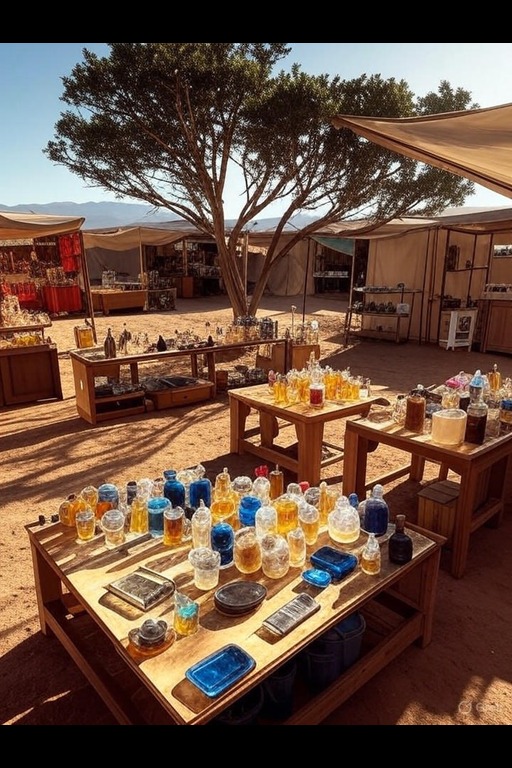
Myrrh Tears are a sought-after resource found in arid landscapes characterized by sun-baked dunes and resilient oases. This fragrant resin is meticulously collected by those traversing the harsh desert, making it a prized luxury in bustling market towns and trade caravans. Renowned for its intoxicating fragrance, Myrrh Tears often feature prominently in temple rituals and ceremonial gatherings. The trade of this exquisite material is vital, as specialized hubs ensure careful grading and secure transport to meet the burgeoning demand.
Universal
Biomes
Politics
Alignments
Races
Resources
Classes
Elevations
Religions
World
No accessible MAPs found.
Biome
Politics
Alignment
Race
Resource
Class
HeightMap
Myrrh Tears
Detailed Description
Sourced from hardy trees that flourish in the harsh conditions of hot deserts, Myrrh Tears are a resinous exudation characterized by their rich, aromatic scent. The process of extraction involves incising the bark of the trees, allowing the sap to flow and solidify into tear-shaped droplets. These natural formations capture the essence of the arid environment, embodying the spirit of the sun and wind that shape their surroundings. Once harvested, Myrrh Tears undergo a careful grading process, where their color, texture, and fragrance are assessed, ensuring only the finest samples reach the market. This meticulous attention to quality has established Myrrh Tears as a symbol of luxury, often sought after by merchants and traders alike. The commodity's value is further enhanced by the difficulty of its harvest and the limited regions in which it can be found, making it a coveted item among both common folk and nobility. In the realm of perfumery, Myrrh Tears serve as a fundamental ingredient in creating fragrant oils and incense that evoke a sense of tranquility and reverence. Artisans blend this resin with other natural essences to craft unique perfumes that hold cultural significance in various ceremonies. The aromatic properties of Myrrh Tears lend themselves beautifully to religious applications, where their scent is believed to purify spaces and elevate the spirit during rituals. Furthermore, the resin is often used in the creation of anointing oils, whose application is reserved for significant occasions, endowing the user with an air of gravitas and honor. As such, Myrrh Tears are integral to both daily life and sacred practices, bridging the gap between the mundane and the divine. The trade routes bustling with caravans transporting Myrrh Tears are alive with activity, forming a vibrant tapestry of commerce. Market towns connected by these routes thrive, as merchants capitalize on the demand for this aromatic resin. Various craftspeople and traders play a role in this economy, from those who collect and grade the resin to those who transform it into incense or sachets. As Myrrh Tears find their way from the arid expanses to the hands of those who appreciate their value, they become more than just a resource; they represent the enduring connection between humanity and the natural world, each tear a testament to the resilience of life in the desert.
Examples
Myrrh Tears are utilized in producing a range of products that highlight their aromatic qualities. Incense made from this resin fills spaces with a warm, inviting scent, perfect for both contemplation and celebration. Additionally, Myrrh Tears are crafted into anointing oils, cherished for their luxurious feel and rich fragrance, often used during significant events. Sachets filled with Myrrh Tears are popular among those seeking to infuse their living environments with a touch of elegance and tranquility. Through these diverse applications, Myrrh Tears continue to captivate those who encounter their unique essence.