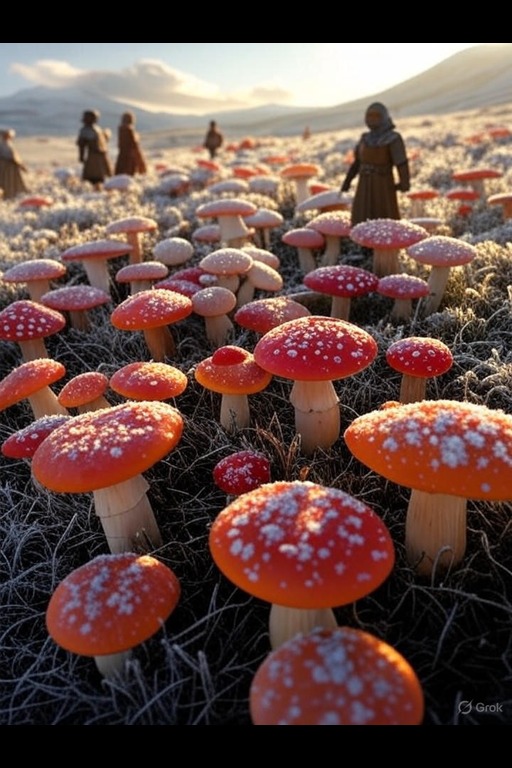
Mushrooms found in tundra regions are a vital resource, thriving in the unique conditions of this harsh environment. Harvesters skillfully gather them, carefully balancing the need for sustenance with the preservation of local stocks. Their culinary versatility enhances various dishes, while their presence supports local trade networks. Settlements often flourish near abundant mushroom sources, creating economic and cultural ties to these fungi.
Universal
Biomes
Politics
Alignments
Races
Resources
Classes
Elevations
Religions
World
No accessible MAPs found.
Biome
Politics
Alignment
Race
Resource
Class
HeightMap
Mushrooms (Tundra)
Detailed Description
Tundra mushrooms emerge in a landscape defined by its cold temperatures and brief growing seasons. With a resilience that mirrors the harshness of their environment, these fungi play a crucial role in local ecosystems. They thrive in the brief bursts of warmth and moisture that characterize summer in tundra regions, making them a seasonal delicacy that many eagerly anticipate. Their growth is often limited to specific areas, which encourages harvesters to return to reliable spots year after year, developing a deep understanding of their patterns and preferences. Harvesting these mushrooms requires skill and knowledge, as many varieties can vary widely in flavor and edibility. Some are pungent and robust, adding depth to dishes, while others might be delicate and subtly flavored, offering a lighter touch. Mastery in differentiating between edible and toxic varieties is essential, as mistakes can lead to dire consequences. The skillful gatherer respects the balance of nature, ensuring that their harvesting practices do not threaten the delicate mushroom populations that are vital to the ecosystem. This conservation-minded approach fosters a sustainable practice that supports both the environment and the community. In culinary applications, tundra mushrooms find their way into a range of dishes, from hearty stews to refined sauces. Their unique flavors are often sought after by chefs looking to elevate their menus. Moreover, these mushrooms lend themselves well to various preservation methods, leading to the creation of dried goods and preserves that can be enjoyed long after the harsh winter months have set in. Trade packs containing these mushrooms become valuable commodities, enriching local markets and enhancing cultural exchange. As a resource, tundra mushrooms not only provide sustenance but also serve as a foundation for trade and economic development. The ability to gather and process these fungi fosters a sense of community among harvesters, further connecting individuals to their environment and to each other. Settlements that cultivate this resource often find that their cultural identities are intertwined with the mushroom, creating bonds that last through generations. Therefore, tundra mushrooms stand as a testament to the resilience and ingenuity of those who inhabit these challenging landscapes, symbolizing both nourishment and connection in a world that is often unforgiving.
Examples
Dried goods made from tundra mushrooms are a staple in many larders, providing flavor and nutrition throughout the year. Preserves crafted from these fungi offer a unique taste of the tundra’s bounty, capturing the essence of the brief growing season. Trade packs filled with assorted mushrooms are exchanged at regional markets, creating economic opportunities for harvesters and bringing seasonal delights to distant lands. Additionally, salts and spices infused with mushroom flavors enhance culinary creations, showcasing the versatility of this resource.