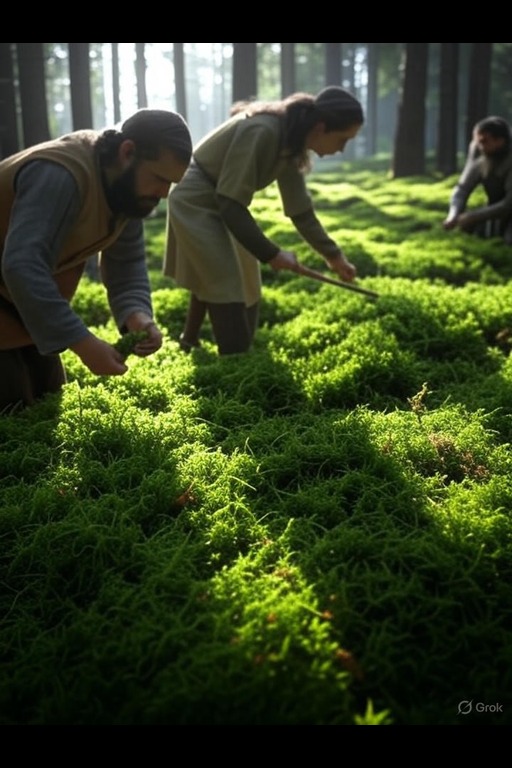
Moss mats are versatile natural resources found in temperate rainforests. They are harvested, cut, and dried into manageable lengths for various practical applications. Once processed, these mats are bundled tightly and stored in a manner that preserves their integrity and prevents mold growth. Their unique texture and durability make them invaluable in numerous industries, particularly in weaving and basketry.
Universal
Biomes
Politics
Alignments
Races
Resources
Classes
Elevations
Religions
World
No accessible MAPs found.
Biome
Politics
Alignment
Race
Resource
Class
HeightMap
Moss Mats
Detailed Description
Moss mats are an essential resource in temperate rainforests, thriving in moist environments where they often cover the forest floor. Their structure is composed of densely packed plant fibers that form a soft, spongy texture. This intrinsic quality allows them to absorb moisture while remaining lightweight and flexible. Harvesting involves carefully cutting the mats to avoid damaging the underlying ecosystem, ensuring sustainability for future generations. Once collected, the moss is dried to prevent decay, maintaining its usability for various applications. The processed moss is typically stripped into workable lengths and bundled tightly. These bundles are then stored off the damp ground, which is crucial to prevent mold and degradation. This practice not only preserves the quality of the moss mats but also enhances their longevity when used in various industries. The versatility of moss mats extends to several crafts, including weaving, basketry, and cordage, making them a staple material for artisans and tradespeople alike. In weaving, moss mats provide a sturdy foundation for creating intricate designs, often serving as both a base layer and a decorative element. In basketry, their pliable nature allows for the crafting of durable yet lightweight containers, suitable for carrying goods or storage purposes. Additionally, moss mats are utilized in the production of cordage, where their fibers can be twisted and braided to create strong ropes and twines. The trade of these moss mats often extends beyond local communities, where they are exchanged for other goods, enriching the fabric of commerce in the region. Their multifunctionality and ease of use solidify their status as a valued resource in various trades and crafts.
Examples
Moss mats find application in numerous products that are integral to daily life in temperate regions. Baskets crafted from moss mats are renowned for their strength and aesthetic appeal, while mats made from the same material serve as excellent sleeping surfaces or protective coverings. Ropes and twines derived from moss fibers are prized for their resilience and flexibility, often employed in construction and fishing. Additionally, their role in trade cannot be understated, as these mats are frequently exchanged for other materials or goods, fostering community relationships and economic interaction.