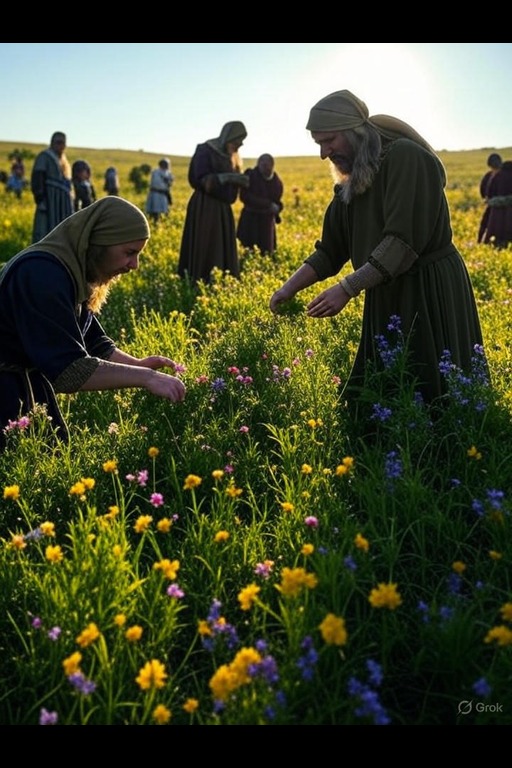
Medicinal Herbs (Prairie) are gathered from the vast expanses of grasslands, where diverse flora thrives in harmony with the land. These herbs possess various healing properties and are essential for numerous practical applications. Harvesting involves minimal tools and a keen eye for quality, ensuring that only the most potent specimens are collected. The remaining plants are left undisturbed, allowing the ecosystem to flourish continuously.
Universal
Biomes
Politics
Alignments
Races
Resources
Classes
Elevations
Religions
World
No accessible MAPs found.
Biome
Politics
Alignment
Race
Resource
Class
HeightMap
Medicinal Herbs (Prairie)
Detailed Description
In the heart of the grasslands, Medicinal Herbs (Prairie) emerge as vital resources adept at thriving in wide-open spaces, where sunlit meadows and gentle breezes shape their growth. The diversity of these herbs is remarkable; they can range from fragrant blooms imbued with soothing properties to formidable plants that serve as natural remedies for ailments. Skilled gatherers traverse these open fields, identifying and harvesting only those herbs that exhibit the strongest characteristics, meticulously avoiding those that do not meet their discerning standards. This sustainable practice allows the remaining flora to propagate, preserving the balance of the prairie ecosystem and ensuring future harvests remain plentiful. To gather these herbs effectively, minimal tools are required, often limited to a simple knife or a small basket for collection. Gatherers rely heavily on their knowledge of the land, knowing the best times of day and seasons to gather each herb for optimal potency. Sorting occurs immediately after collection, typically conducted at the periphery of the grassland, where the herbs can be examined in the open light. Only sound material is retained; any damaged or wilted specimens are discarded back to the wild, contributing to the organic cycle of life that sustains this biome. The applications of these herbs are vast, serving as cornerstones for various industries such as crafting, trade, construction, and transport. Artisans use them to create craft goods that range from simple poultices to intricate salves and tinctures, while traders recognize their value, exchanging them for goods and services across distances. Constructing with these herbs can involve infusing building materials with their natural properties, thereby enhancing their utility. The transport of these herbs often requires careful handling, as the delicate nature of some varieties demands attention to preserve their beneficial qualities until they reach their final destination. In summary, Medicinal Herbs (Prairie) serve as more than just a collection of plants; they embody a relationship between gatherers and the land, fostering a cycle of respect and sustainability. The practice of gathering these herbs not only supports the individuals who rely on them but also nurtures the very grasslands that yield such valuable resources. Through conscientious harvesting and mindful application, the benefits of these herbs echo throughout various aspects of life, ensuring their significance remains embedded in the culture of those who embrace the prairie’s bounty.
Examples
Common products derived from Medicinal Herbs (Prairie) include a variety of herbal remedies and craft goods intended for both personal and communal use. For example, local artisans might create healing balms that soothe aches and promote skin health, while skilled traders often offer dried herbs as valuable commodities in bustling markets. Additionally, some construction ventures may incorporate these herbs into building materials, utilizing their natural properties to enhance strength and resilience. Tools designed for harvesting or processing these herbs also find their way into the hands of those dedicated to herbalism, further solidifying their practical applications in daily life.