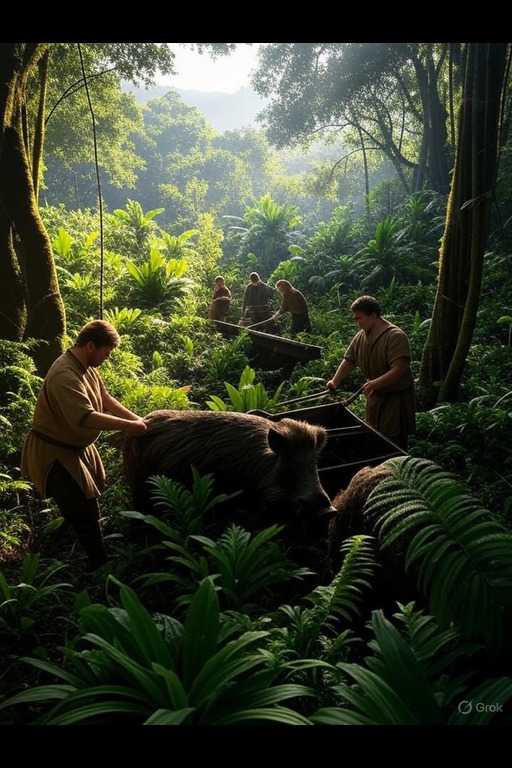
Jungle Game, often referred to as boar in local vernacular, thrives in the lush environments of tropical dry forests and seasonal rainforests. This resource is vital for many communities, providing sustenance and materials essential for various crafts and trades. Harvesters must exercise skill and timing to ensure sustainable gathering, preserving the delicate balance of local ecosystems. The presence of these animals often dictates the location of settlements, as reliable sources greatly influence trade dynamics and cultural practices.
Universal
Biomes
Politics
Alignments
Races
Resources
Classes
Elevations
Religions
World
No accessible MAPs found.
Biome
Politics
Alignment
Race
Resource
Class
HeightMap
Jungle Game (Boar)
Detailed Description
The Jungle Game, commonly known as boar, occupies a prominent niche within the rich tapestry of tropical dry forests and seasonal rainforests. Renowned for its robust physique and adaptability, this creature has become an integral part of the local environment, influencing both the flora and fauna surrounding it. Harvesters engage with these animals during specific seasons, employing traditional methods that respect the rhythms of nature. This reliance on skill and timing ensures that populations remain healthy and sustainable, fostering a deep connection between the harvesters and their environment. The hunting of Jungle Game serves multiple purposes, extending beyond mere sustenance. The meat is often transformed into a variety of products, including smoked and cured options that allow for preservation and trade. Beyond dietary needs, the hides are skillfully tanned, becoming valuable materials for garments and tools, while bone fragments are crafted into essential implements. This versatility not only supports local economies but also encourages a rich tradition of craftsmanship, as artisans learn to work with every part of the animal. Communities often emerge near reliable sources of Jungle Game, creating a symbiotic relationship between the inhabitants and their surroundings. Such settlements become hubs of trade where boar meat and its byproducts are exchanged for other goods and services. The local economy thrives on this interconnectedness, with hunters, tanners, butchers, and textile workers all playing crucial roles in maintaining the flow of resources. The presence of these communities contributes to a vibrant cultural landscape, fostering traditions that celebrate the bounty of the land and the skills of the people who inhabit it.
Examples
Products derived from Jungle Game display the resource's versatility and importance in local economies. Smoked Jungle Game provides nourishment and is a popular delicacy, while cured variants extend its shelf life for storage and trade. Tanned hides become sought-after materials for crafting garments that offer protection and warmth, and bone tools exemplify the resource's utility in everyday life. Furthermore, the luxurious fur garments made from this game reflect the craftsmanship and cultural significance tied to the animal.