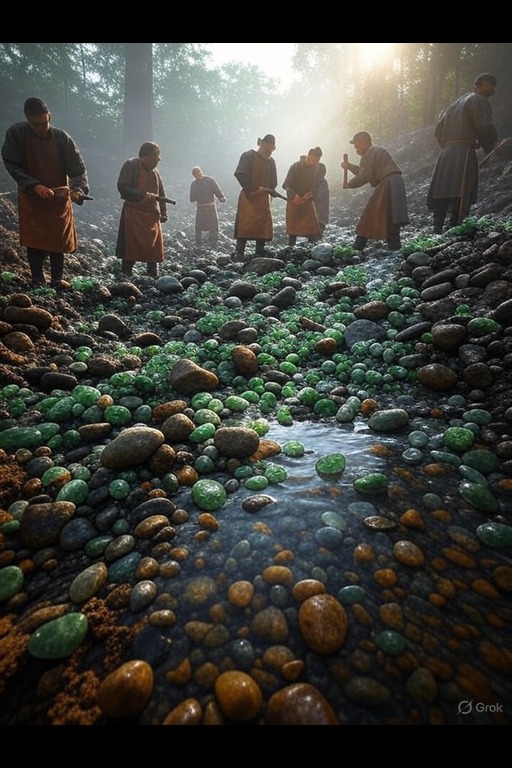
Jade Pebbles are valued for their rich coloration and smooth texture, often found in narrow veins within temperate rainforests. These stones reveal themselves through diligent chiseling and washing processes employed by skilled miners. Although they can fracture easily, careful handling allows for the extraction of sound crystals. The mining of these pebbles supports various industries, particularly in jewelry and trade.
Universal
Biomes
Politics
Alignments
Races
Resources
Classes
Elevations
Religions
World
No accessible MAPs found.
Biome
Politics
Alignment
Race
Resource
Class
HeightMap
Jade Pebbles
Detailed Description
Sourced from narrow veins and pockets hidden within the lush undergrowth of temperate rainforests, Jade Pebbles embody a unique aesthetic appeal that captivates artisans and traders alike. The process of unearthing these stones demands a meticulous approach, where miners often rely on their experience and intuition to identify promising sites. After selecting a location, they employ chiseling tools to delicately extract the stones, revealing their natural beauty while avoiding waste. Washing the pebbles further enhances their allure, as it removes the detritus of the earth, allowing the vibrant greens and creamy whites of the jade to shine through. Miners, well-versed in the nuances of their craft, are adept at discerning which stones are worth the effort and which will simply fracture upon extraction. This knowledge is crucial, as the pebbles can be fragile, necessitating careful handling to prevent loss during the mining process. Once collected, the stones are sorted; sound crystals are separated from those deemed unsuitable, which are discarded to preserve the quality of the mined material. The remaining good-quality pebbles are then packed in padded boxes, ensuring they remain intact during transportation. This attention to detail highlights the respect miners hold for the material and its potential value. The industry surrounding Jade Pebbles is diverse, with jewelers and craftspeople often utilizing the stones to create exquisite jewelry pieces that celebrate their natural beauty. Intricate designs showcasing the pebbles' smooth surfaces and deep hues are popular among artisans. The stones are also used in decorative inlay work, giving furniture and ornamental objects a touch of elegance. Beyond aesthetics, these pebbles hold value in trade, serving as a form of currency in some regions where they are in demand. Their desirability makes them a sought-after item in markets, fostering an environment of commerce that benefits local economies. Additionally, while Jade Pebbles themselves do not possess magical properties, their allure often inspires artists and enchantment practitioners, who may embed them in foci or talismans crafted for other purposes. This connection, although not inherent to the stones, further emphasizes their significance within the broader context of craftsmanship and trade. In summary, Jade Pebbles are more than mere stones; they are products of a delicate balance between nature and human endeavor. Their extraction and utilization reflect a deep-rooted appreciation for the resources provided by the temperate rainforest biome. As the demand for finely crafted jewelry and decorative items continues, these pebbles will remain integral to the industries that celebrate their beauty and craftsmanship.
Examples
Various products emerge from the crafting of Jade Pebbles, including stunning pieces of jewelry that adorn wearers with elegance. Artisans often utilize these stones in decorative inlay, enhancing the beauty of wooden items and sculptures. Additionally, they serve as trade goods, finding their way into markets where they are exchanged for other valuable commodities. Enchanted foci, created with meticulous care, may also incorporate Jade Pebbles for their aesthetic appeal, reflecting the craftsmanship of skilled hands. Such versatility ensures these pebbles maintain a significant role in both commerce and artistry.