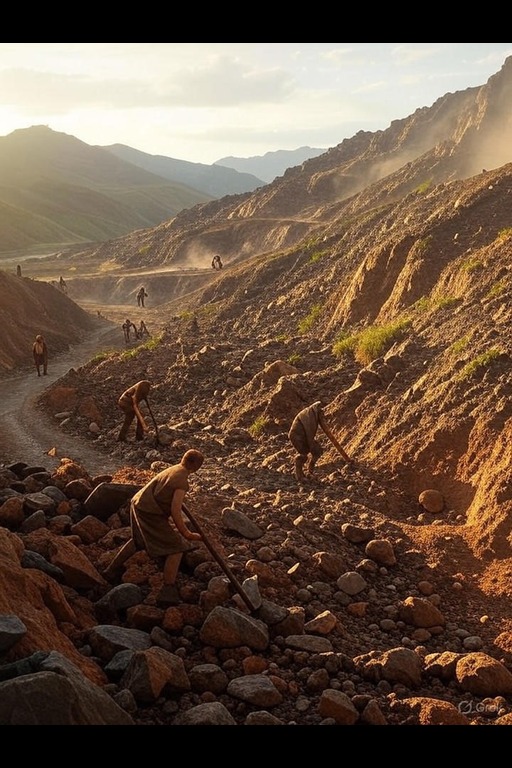
Iron Ore is a vital mineral found within arid landscapes, shaped by extensive geological processes over millennia. It is highly sought after by miners who venture into harsh environments to extract the valuable deposits for a variety of uses. The ore serves as a foundational resource for crafting tools, weapons, and armor, and plays a significant role in various trade networks. However, the extraction process can be fraught with danger, requiring skill and caution to navigate the challenging terrain and potential hazards.
Universal
Biomes
Politics
Alignments
Races
Resources
Classes
Elevations
Religions
World
No accessible MAPs found.
Biome
Politics
Alignment
Race
Resource
Class
HeightMap
Iron Ore
Detailed Description
Iron Ore is predominantly located in regions characterized by dry heat and sparse vegetation, where the landscape often reveals rocky outcrops rich in mineral deposits. These areas, shaped by ancient geological activity, provide the perfect conditions for the formation of iron-rich veins. Over time, the relentless forces of erosion and weathering have exposed these deposits, making them accessible to those willing to brave the elements. Miners often traverse vast stretches of desolate land, using specialized tools and techniques to extract the ore from its rough matrix, knowing that their efforts will yield rewards in the form of raw material for crafting and trade. The industries surrounding Iron Ore are varied and significant, with mining, smithing, and weapon forging standing at the forefront. Artisans skilled in the art of metallurgy transform the raw ore into ingots, which serve as the basis for various applications. This refined metal is then shaped into durable tools and formidable weapons, prized for their strength and reliability. Armor crafted from Iron Ore offers protection to adventurers and soldiers alike, providing both functionality and a testament to the skill of its maker. The trade of these products fuels local economies, as merchants seek to acquire and distribute the finished goods across distant lands, creating a network of exchange that enhances cultural interactions and economic growth. However, the mining of Iron Ore is not without its challenges. The harsh environments where these minerals are found can pose significant risks, from extreme weather conditions to the potential for rock slides or encounters with local wildlife. Miners must be well-prepared, employing both physical endurance and strategic planning to navigate the difficult terrain. Safety measures are paramount, with teams often working in tandem to ensure that the extraction process is executed as smoothly as possible. As the demand for Iron Ore continues to rise, the balance between resource extraction and environmental stewardship becomes increasingly important, prompting discussions on sustainable mining practices that can protect these fragile ecosystems while still meeting the needs of industry. The legacy of Iron Ore stretches across many facets of civilization, influencing warfare, craftsmanship, and trade networks. The strength and versatility of the metal ensure its status as a cornerstone material in the development of societies, enabling technological advancements and the establishment of prosperous communities. As miners delve deeper into the earth's crust in search of this essential resource, they continue to engage in an age-old practice that entwines humanity with the very fabric of the land itself.
Examples
Common products derived from Iron Ore include ingots that serve as the building blocks for various metalworks. Artisans craft Iron Ore into weapons such as swords and axes, renowned for their durability. Additionally, the ore is used in the creation of sturdy armor that affords protection in battle. Tools fashioned from refined Iron Ore are valued for their effectiveness and longevity, making them indispensable for a variety of tasks. Furthermore, advanced smiths develop refined alloys that enhance the properties of the base metal, expanding its applications in various industries.