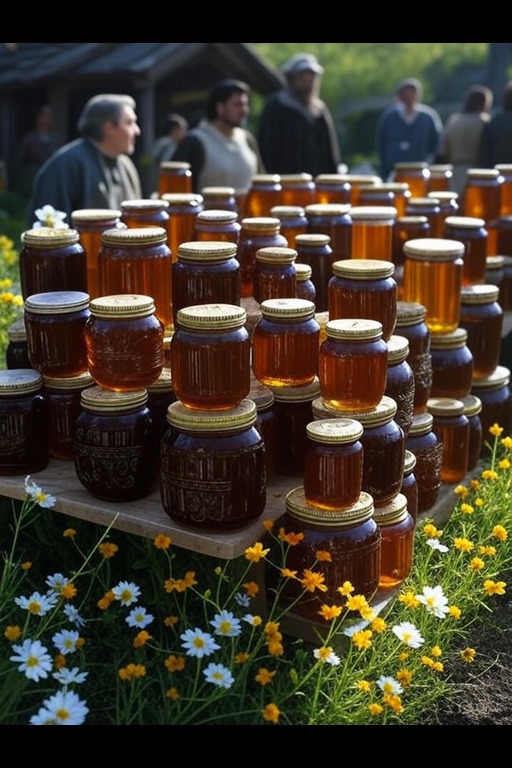
Honey Jars are coveted containers filled with the rich, golden sweetness harvested from local beehives in temperate deciduous forests. These jars are often found in bustling market towns, where artisans and merchants eagerly trade them for their versatile uses. The popularity of Honey Jars is heightened by the distinct flavors derived from the local flora, making them a prized ingredient in various culinary and brewing endeavors. Their availability is influenced by seasonal cycles and the skill of local beekeepers, ensuring a continuous quest for the finest specimens.
Universal
Biomes
Politics
Alignments
Races
Resources
Classes
Elevations
Religions
World
No accessible MAPs found.
Biome
Politics
Alignment
Race
Resource
Class
HeightMap
Honey Jars
Detailed Description
The allure of Honey Jars lies not only in their contents but also in their craftsmanship. Artisans skillfully fashion these jars from a variety of materials, often incorporating regional influences that reflect the natural beauty of their surroundings. The design of each jar can vary, with some featuring intricate carvings or colorful glazes that hint at the flavors contained within. These jars serve not only as vessels for honey but also as decorative items that enhance the ambiance of any kitchen or dining space. The honey itself is sourced from local hives, where bees collect nectar from a diverse range of wildflowers, resulting in a multitude of flavors and aromas that vary with the seasons. Such diversity adds to the appeal of Honey Jars, as connoisseurs seek specific varieties for their unique profiles. The culinary applications for Honey Jars are numerous and diverse. Chefs and home cooks alike utilize honey in glazes, marinades, and desserts, drawn to its natural sweetness and ability to enhance flavors. Honey Jars are also integral to the brewing industry, where they are used to create specialty ales and meads that evoke the essence of the surrounding landscape. The fermentation process can be delicately influenced by the floral sources of the honey, yielding beverages with distinctive character and depth. Beyond the kitchen, Honey Jars find their place in the realm of preserves, where the sweet nectar is combined with fruits and spices to create delightful spreads that celebrate the bounty of the season. Trade is another vital aspect of the Honey Jar's existence. Market towns nestled within temperate deciduous forests serve as hubs for the exchange of these prized containers. Here, merchants specialize in grading the quality of honey, ensuring that the finest examples are transported safely to distant regions. The demand for Honey Jars often leads to fierce competition among traders, with the best jars fetching commendable prices. Local economies thrive on this trade, creating a vibrant network of beekeepers, artisans, and merchants who share a mutual appreciation for the sweet golden treasure contained within these jars. Each jar tells a story, reflecting the hard work of nature and the skilled hands that bring its essence to the table.
Examples
Honey Jars can be found in various forms, each showcasing the versatility of this beloved resource. They are often used to create glazes that enhance roasted meats, offering a rich and aromatic finish. In the brewing community, Honey Jars are transformed into smooth liqueurs that capture the essence of the forest, ideal for sipping or mixing. Additionally, preserves made from honey can elevate breakfasts, pairing beautifully with breads and pastries, while also providing a delightful taste of the season's harvest.