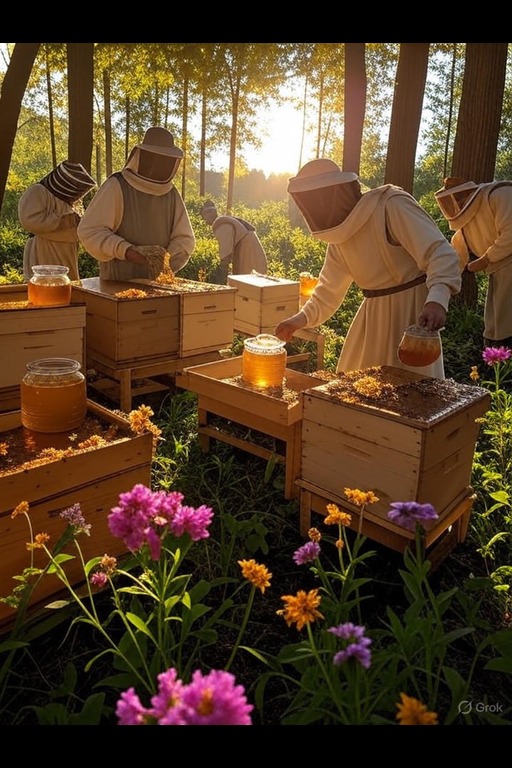
Honey (Forest) is cultivated in temperate rainforests, where the abundance of flora supports thriving colonies of bees. These industrious insects transform the nectar sourced from a diverse array of flowers into a rich, golden substance. Harvesting occurs with the changing seasons, ensuring that the product remains fresh and flavorful. To facilitate long journeys and trade, honey is often preserved through various methods, enhancing its longevity and usability in numerous culinary applications.
Universal
Biomes
Politics
Alignments
Races
Resources
Classes
Elevations
Religions
World
No accessible MAPs found.
Biome
Politics
Alignment
Race
Resource
Class
HeightMap
Honey (Forest)
Detailed Description
In the heart of temperate rainforests, honey is produced through the diligent efforts of bees that gather nectar from a wide variety of flowering plants. This natural resource thrives in environments where the interplay of moisture and sunlight fosters lush vegetation, allowing for an abundant supply of nectar. Beekeepers carefully manage hives to ensure optimal conditions, providing steady feed and clean water to support healthy bee populations. This careful stewardship yields honey that is not only sweet but also infused with the unique flavors of its floral sources, reflecting the diverse ecosystem in which it is harvested. The process of gathering honey involves several stages, beginning with the collection of nectar by worker bees. Once the nectar is transformed into honey through enzymatic action and evaporation, it is stored within the hive. As seasons turn, beekeepers harvest the honey, employing techniques that minimize disruption to the bees and their habitat. The harvested honey is then processed to ensure its quality and safety for consumption. To extend its shelf life and facilitate trade, honey is often preserved using methods such as smoking or curing, which enhances its flavor profile while protecting it from spoilage. Honey (Forest) plays a crucial role in various industries beyond mere consumption. In husbandry, it is used as a natural sweetener for livestock feed, promoting healthy growth and enhancing the quality of animal products. The food trade benefits significantly from the versatility of honey, integrating it into a myriad of recipes, from sweet treats to savory dishes. Additionally, the preservation industry utilizes honey as a key ingredient in the curing of meats and fish, imparting a unique depth of flavor while helping to prolong shelf life. Leather processing also finds value in honey, using it in treatments that enrich the material's resilience and appeal. While honey is cherished for its taste and utility, its production is deeply intertwined with the health of the ecosystem. The presence of thriving bee populations is indicative of a balanced environment, where diverse plant life flourishes. As such, the cultivation of honey is not only a testament to human ingenuity but also a reminder of the delicate interplay between nature and agriculture. As beekeepers continue to honor traditional methods alongside modern practices, the pursuit of this sweet resource remains a vital aspect of life within temperate rainforests.
Examples
Products derived from Honey (Forest) are varied and abundant, serving multiple industries. In the realm of food, honey is crafted into an array of cured goods that are prized for their unique flavors and preservation qualities. Additionally, it is often combined with meat and fish to create delicacies that showcase the depth of its sweetness. Dairy products may also incorporate honey, enhancing the natural richness of cheese and yogurt. As a trade good, honey finds its way into markets, celebrated for both its culinary versatility and its status as a natural product of the forest.