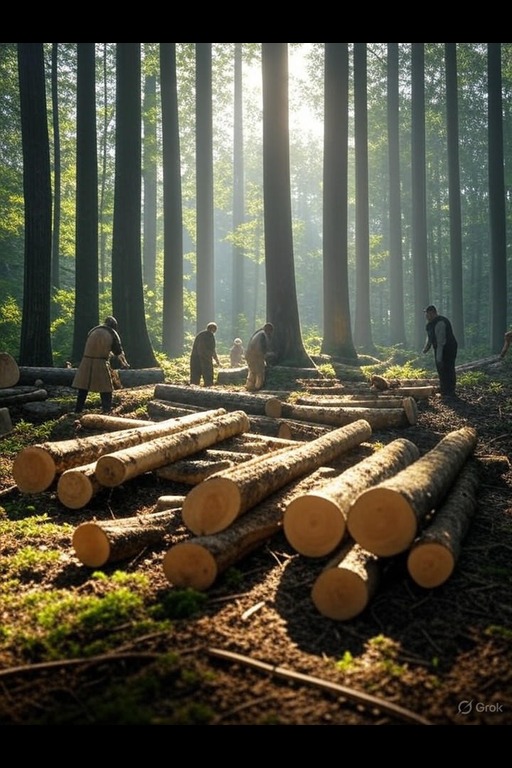
Hemlock Timber is derived from the majestic hemlock trees that thrive in temperate rainforests. Preferred for its straight trunks, this timber is often chosen for its structural integrity and aesthetic appeal. Once harvested, logs are rough-milled and allowed to season, with protective measures taken to prevent checking. Its versatility makes it a favored resource across various industries, including logging, carpentry, and construction.
Universal
Biomes
Politics
Alignments
Races
Resources
Classes
Elevations
Religions
World
No accessible MAPs found.
Biome
Politics
Alignment
Race
Resource
Class
HeightMap
Hemlock Timber
Detailed Description
The process of obtaining Hemlock Timber begins with the careful selection of mature trees, which are identified for their straightness and quality. The felling of these towering giants is executed with precision, ensuring minimal disruption to the surrounding ecosystem. Once cut, the logs are transported to milling sites where they undergo rough milling, transforming them into manageable pieces that can be further processed. This initial stage is critical, as the quality of the timber directly impacts its usability in construction and crafting. After milling, the logs are stacked in a controlled environment to season, a crucial step that allows the moisture content to diminish gradually. To combat cracking and warping, the ends of the logs are sealed with a protective coating, preserving their integrity during the drying process. This careful attention to detail ensures that the timber retains its strength and beauty, making it suitable for a wide range of applications. In a variety of settings, Hemlock Timber becomes a reliable choice for builders and artisans alike, showcasing the natural elegance of the wood while providing durability in structural forms. The variety of products that can be created from Hemlock Timber is vast, with lumber, beams, and boards being prominent in construction projects. Skilled carpenters often turn this timber into intricately carved goods, taking advantage of its workability and pleasing grain patterns. Beyond its physical attributes, Hemlock Timber also offers traders a valuable commodity, as its desirability in markets often leads to competitive exchanges. This timber not only contributes to the functionality of structures but also enhances the aesthetic appeal of crafted items, bridging the gap between practicality and artistry in various applications.
Examples
Common products derived from Hemlock Timber include sturdy lumber used in framing buildings and beams that provide crucial support in construction. Additionally, artisans find joy in crafting carved goods, showcasing the unique grain and character of this timber. Its reputation as trade timber further solidifies its place in commerce, as merchants seek to supply builders and craftsmen with this sought-after resource. The combination of strength and beauty makes Hemlock Timber an enduring favorite among those who work with wood.