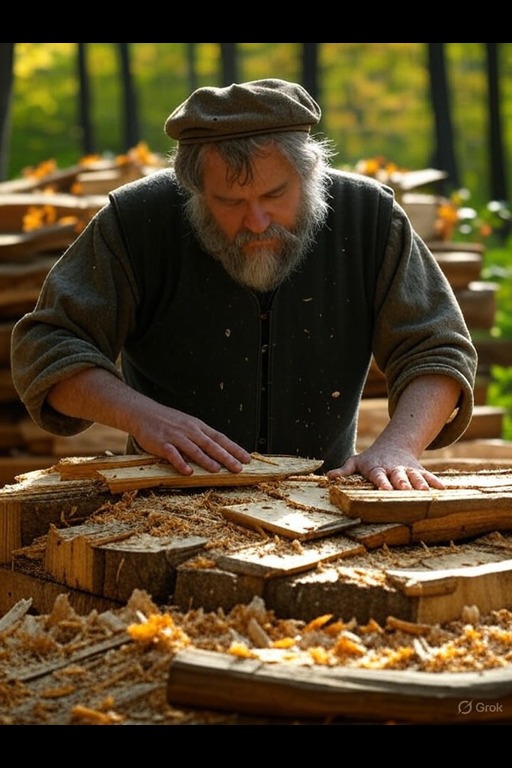
Hand-split shingles are a favored material in temperate rainforests, renowned for their durability and workability. These shingles are crafted by artisans who employ small tools to shape each piece with precision. Once prepared, the shingles are bundled and labeled according to size, making them accessible for both workshops and market traders. Their aesthetic appeal and functional qualities make them a sought-after resource in various industries.
Universal
Biomes
Politics
Alignments
Races
Resources
Classes
Elevations
Religions
World
No accessible MAPs found.
Biome
Politics
Alignment
Race
Resource
Class
HeightMap
Hand-split Shingles
Detailed Description
The process of creating hand-split shingles begins with selecting high-quality timber, typically sourced from local trees that thrive in moist, temperate environments. Artisans carefully split the wood along its grain, ensuring each shingle maintains a natural edge that enhances its visual character. This method not only preserves the integrity of the material but also allows for variations in thickness and texture, which can add a distinct charm to finished products. Using specialized tools, artisans further shape the shingles, smoothing the surfaces while retaining the organic features of the wood. This attention to detail results in shingles that are both functional and visually appealing, ideal for a range of applications. Hand-split shingles find their way into diverse sectors, particularly in artisan crafts and decorative arts. They are often used as roofing material, lending a rustic yet elegant touch to structures. Beyond construction, these shingles serve as a base for a variety of decorative items, from intricate wall hangings to artistic weaves that integrate the natural beauty of the wood. Whether used in textiles or carved goods, the versatility of hand-split shingles supports creativity and craftsmanship across industries. Market traders value the uniformity in size and quality, which assists in pricing and selling to both professional artisans and amateur creators alike. Furthermore, the local availability of suitable timber contributes to the sustainability of this resource. The practice of hand-splitting is not only a traditional skill but also one that supports local economies and preserves cultural heritage. Workshops often host training for newcomers, sharing techniques passed down through generations. This sense of community fosters an appreciation for the artistry involved in crafting shingles, ensuring that both the material and the methods endure. As a result, hand-split shingles remain a staple resource, revered for their craftsmanship and adaptability in a variety of applications, from practical construction to artistic endeavors.
Examples
Examples of products made from hand-split shingles are numerous and varied. Artisans often create decorative items such as wall panels and sculptures that showcase the unique grain patterns of the wood. Additionally, these shingles can be transformed into textiles and weaves, adding a rustic elegance to fabric creations. Trade goods crafted from hand-split shingles are also popular, as they attract collectors and consumers drawn to the natural beauty of the material. The combinations of function and artistry highlight the enduring appeal of this resource in multiple markets.