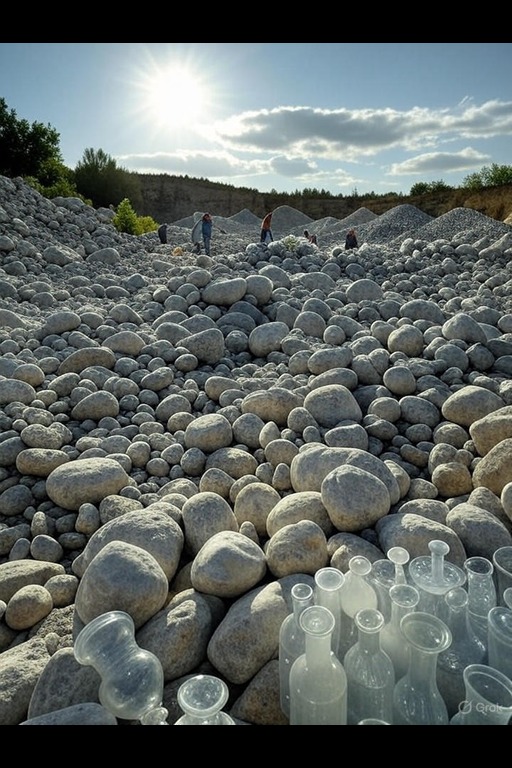
Gravel Aggregate is a versatile mineral resource commonly found in grassland biomes. It is extracted from natural beds and terraces, enabling its use in various industries. The material is typically separated into blocks and fines, with specific portions designated for construction purposes. Additionally, some are processed into glass and ceramics, showcasing its adaptability in trade and commerce.
Universal
Biomes
Politics
Alignments
Races
Resources
Classes
Elevations
Religions
World
No accessible MAPs found.
Biome
Politics
Alignment
Race
Resource
Class
HeightMap
Gravel Aggregate
Detailed Description
Gravel Aggregate serves as a fundamental building block in numerous construction projects, making it a cornerstone of the quarrying industry. Its extraction involves careful consideration of the landscape, where miners skillfully scoop or quarry the material from riverbeds or natural terraces. This resource, characterized by a mix of smooth and jagged stones, is prized not only for its structural integrity but also for its aesthetic appeal when cut into uniform blocks. The quarrying process itself is meticulous, often involving the use of simple tools to ensure that the integrity of the surrounding environment is maintained as much as possible. Once extracted, Gravel Aggregate is sorted into distinct categories. Larger pieces are often cut into stone blocks suitable for foundational work, walls, or decorative facades. The finer particles, on the other hand, find their way into various mixtures, becoming integral components of concrete or asphalt. This versatility is what makes Gravel Aggregate a sought-after resource in construction, paving the way for roads, buildings, and other infrastructures that define landscapes. In addition to construction, Gravel Aggregate plays a crucial role in the production of glass and ceramics. The finer aggregates are often melted down or fired to create a range of products, from everyday tableware to intricate glass artworks. The adaptability of this mineral resource extends to its use in trade as well, where it is commonly exchanged for other goods or services. As such, Gravel Aggregate not only supports the physical construction of environments but also fuels economic activity through its widespread demand and various applications across industries.
Examples
Common products derived from Gravel Aggregate include cut stone, which is frequently utilized in building projects, and glass, crafted for both functional and decorative purposes. Additionally, ceramics made from the finer elements of this mineral are prevalent in households and businesses alike. The use of Gravel Aggregate in cement and concrete also highlights its importance in creating durable structures. Trade goods bearing this resource are regularly transported between regions, further demonstrating its value in commerce.