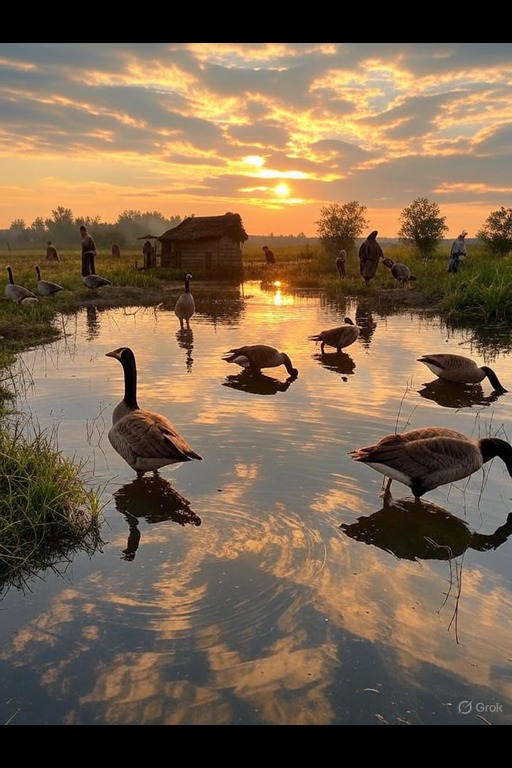
Goose rearing is a practice that involves the careful management of these waterfowl, ensuring they have adequate feed and clean water throughout their growth. As the seasons change, farmers either cull or gather the birds, preparing for various market demands. The products of goose rearing are often preserved through smoking, salting, or curing, enabling them to endure long journeys to distant markets. Not only do these birds provide a source of meat and eggs, but their byproducts also contribute to the leather and food trade industries.
Universal
Biomes
Politics
Alignments
Races
Resources
Classes
Elevations
Religions
World
No accessible MAPs found.
Biome
Politics
Alignment
Race
Resource
Class
HeightMap
Goose Rearing
Detailed Description
The art of goose rearing is deeply rooted in the understanding of the wetlands where these birds thrive. These habitats provide not just a natural abundance of food but also a critical environment for nurturing young goslings. Farmers who engage in this practice must cultivate a delicate balance, ensuring that the birds receive a steady diet of grains, greens, and aquatic plants while maintaining access to clean water. This careful management contributes to the overall health and size of the flocks, which are central to the success of the rearing operation. As the seasons shift, rearing operations adapt to the cyclical nature of life. Goslings are monitored closely, with attention paid to their growth patterns and health. When the time is right, farmers will make the decision to cull or gather the birds for processing. This careful timing is essential to maximizing both the quality and quantity of the products harvested. Each bird is treated with respect, and an emphasis is placed on swift processing methods to preserve the freshness of the meat and eggs. Preservation techniques are a hallmark of goose rearing. Once processed, the meat is often transformed through methods such as smoking or salting, creating products that not only have enhanced flavors but also increased shelf lives. These cured goods are highly sought after in food markets, enabling trade over considerable distances. Beyond meat and eggs, the feathers and down harvested from the geese are valued in various industries, providing materials for apparel and insulation. The versatility of goose products ensures that every aspect of the bird is utilized, contributing to sustainable practices within the farming community. Overall, goose rearing represents a harmonious blend of agriculture and craftsmanship. The wetlands provide an ideal environment for these creatures, while the skills of the farmers drive successful production. As the industry continues to evolve, the importance of maintaining traditional methods alongside innovative practices will remain significant. This delicate balance preserves not only the livelihoods of those engaged in rearing but also the rich tapestry of life within the wetland ecosystem.
Examples
The products derived from goose rearing are diverse and valuable. Farmers produce succulent meats and rich eggs that serve as staples in many diets. Additionally, cured goods such as smoked gizzards or salted breasts find their way into markets as gourmet offerings. The byproducts of goose rearing extend to trade goods like leather, which is crafted from the bird's hide and utilized in various artisanal industries. Overall, the practice enhances both local economies and culinary traditions.