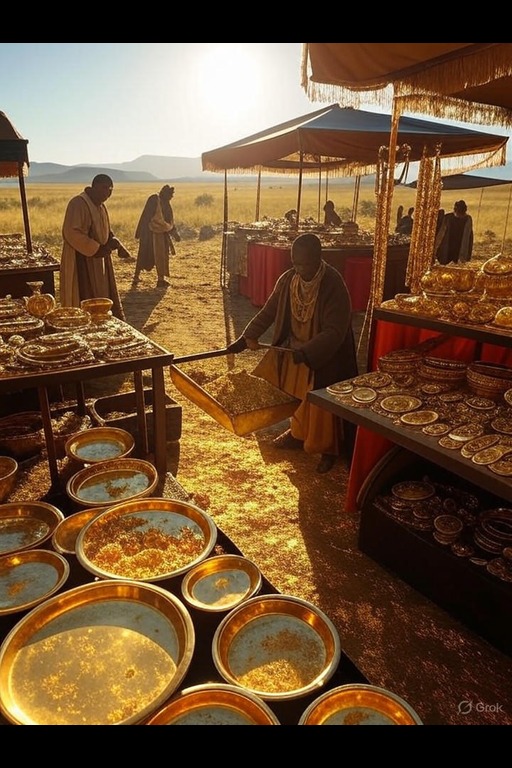
Gold Dust is a sought-after mineral found primarily in savanna regions, where geological processes have worked over millennia to produce gleaming deposits. Miners and artisans prize this resource for its versatility in crafting and trade. While the extraction of Gold Dust can be a treacherous endeavor, its value is evident in various industries. From jewelry to religious artifacts, Gold Dust plays a significant role in economic and cultural practices.
Universal
Biomes
Politics
Alignments
Races
Resources
Classes
Elevations
Religions
World
No accessible MAPs found.
Biome
Politics
Alignment
Race
Resource
Class
HeightMap
Gold Dust
Detailed Description
Renowned for its lustrous sheen, Gold Dust is formed through the erosion of rich ore deposits, carried by water and wind over countless ages. This mineral is often unearthed in areas where ancient riverbeds once flowed, leaving behind traces of its opulence. Miners brave the elements and potential hazards to extract this precious resource, often utilizing a combination of traditional methods and rudimentary tools to sift through sediment and uncover the finer particles. The allure of Gold Dust lies not only in its beauty but also in its relative rarity and the challenges associated with its procurement. The industries that rely on Gold Dust are diverse and vital to local economies. Jewelers craft intricate pieces that reflect the mineral's reflective qualities, often combining it with gemstones to enhance their appeal. Minting establishments create coins that are both a medium of exchange and a symbol of status, ensuring that Gold Dust maintains its relevance in trade. Alchemists incorporate the mineral into potions and elixirs, believing in its potential to imbue certain qualities into their concoctions, while religious artisans create sacred artifacts that resonate with the weight of tradition. Each crafted item, imbued with the shimmer of Gold Dust, serves a purpose that extends beyond mere aesthetics. The cultural significance of Gold Dust is evident in its use for ceremonial purposes and as a mark of wealth and prestige. Chalices adorned with Gold Dust are often used in rituals, symbolizing purity and divine favor. Crowns crafted from Gold Dust signify authority and are worn by leaders during important events. Even relics and inlays made from this mineral are treasured, often passed down through generations as symbols of heritage and history. The dust that once lay quietly beneath the earth now holds stories of ambition, artistry, and reverence, reflecting the myriad ways in which it has been woven into the fabric of society. In conclusion, Gold Dust is much more than a mere mineral; it is a cornerstone of cultural expression and economic activity. Its extraction remains a perilous venture, yet the rewards are manifold, enriching both the artisan who shapes it and the society that values its existence. As long as the earth continues to yield this remarkable resource, its legacy will endure in the creations born from its brilliance.
Examples
Common products made from Gold Dust include coins that carry both weight and beauty, allowing for their use in trade and as status symbols. Artisans create exquisite jewelry that captures the light and attention of onlookers, while chalices and crowns serve as testaments to craftsmanship and authority. Religious relics often incorporate Gold Dust, signifying their sacred nature and enhancing their importance in various rituals. In each case, Gold Dust transforms from a raw resource into a cherished artifact, reflecting the values and creativity of the societies that embrace it.