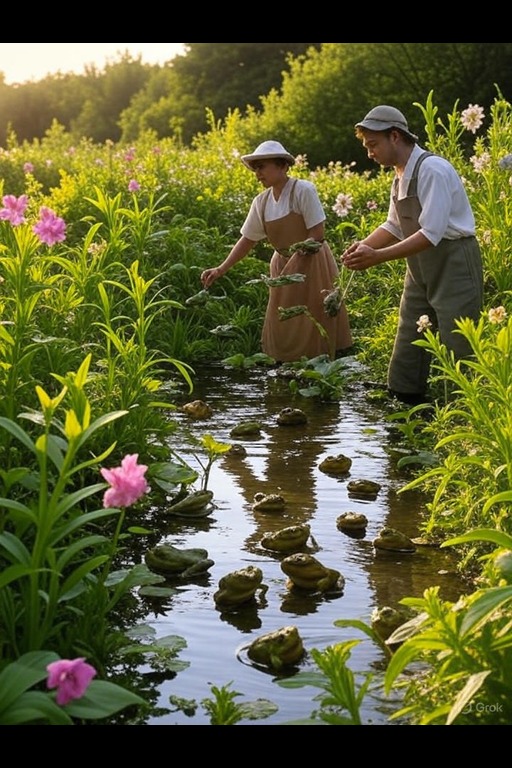
Frogs are cultivated in freshwater environments, where their life cycles and habitats are influenced by climate and local traditions. The methods of harvesting and preparing frogs vary seasonally, impacting the quality of the yield. Farmers often engage in trade, exchanging surpluses with neighboring regions, ensuring a steady flow of these delicacies. Caravans commonly seek preserved forms of frogs for long journeys and for winter sustenance.
Universal
Biomes
Politics
Alignments
Races
Resources
Classes
Elevations
Religions
World
No accessible MAPs found.
Biome
Politics
Alignment
Race
Resource
Class
HeightMap
Frogs
Detailed Description
Frogs thrive in freshwater biomes, where their unique life cycles integrate seamlessly with the surrounding ecosystems. Typically found in shallow ponds, marshes, and streams, these amphibians form a crucial component of the local food web. Their cultivation requires a deep understanding of the ecological balance within their environments, as well as the climatic influences that dictate their growth and reproductive patterns. As a result, the quality and availability of frogs are often tied to the seasons and the practices of the farmers who tend to them. Farmers utilize a range of methods to cultivate frogs, adapting their techniques based on regional climates and traditions. Some may employ natural breeding practices, allowing frogs to reproduce in controlled habitats, while others might focus on harvesting wild populations. The timing of these activities is crucial; spring often heralds the peak of frog activity, making it an ideal time for harvesting. The skills passed down through generations contribute to a rich tapestry of culinary traditions surrounding these creatures, with various preparations enhancing their appeal. The culinary versatility of frogs is evident in the numerous ways they are prepared. Dried frogs serve as a popular snack or ingredient, while preserved frogs can be savored in stews or incorporated into rich sauces. Fermentation techniques enhance their flavor, developing a unique profile that appeals to discerning palates. Spiced frogs, often marinated with local herbs and spices, showcase the creativity of culinary artisans, while candied frogs present a sweet treat that highlights the ingredient's adaptability. The trade of these products is significant, with preserved varieties being particularly prized for long journeys or as winter provisions, ensuring that the essence of freshwater frogs can be enjoyed year-round. In addition to their culinary uses, frogs embody the connection between agriculture and the natural world. Their presence indicates a healthy ecosystem, thus fostering an appreciation for sustainable practices among cultivators. The care and respect shown towards these creatures reflect a broader understanding of the interconnectedness of life within freshwater habitats, a philosophy that resonates within many communities. As such, the farming and trading of frogs not only support local economies but also encourage a deeper relationship with the surrounding environment.
Examples
Dried frogs serve as a convenient source of protein and are often enjoyed as snacks or ingredients in various dishes. Preserved frogs are commonly used in hearty stews, providing depth and flavor. Fermented frogs contribute a distinct taste that enhances many culinary creations, while spiced frogs add a burst of flavor through careful seasoning. Candied frogs offer a unique sweet treat, showcasing the versatility of this resource in both savory and sweet applications.