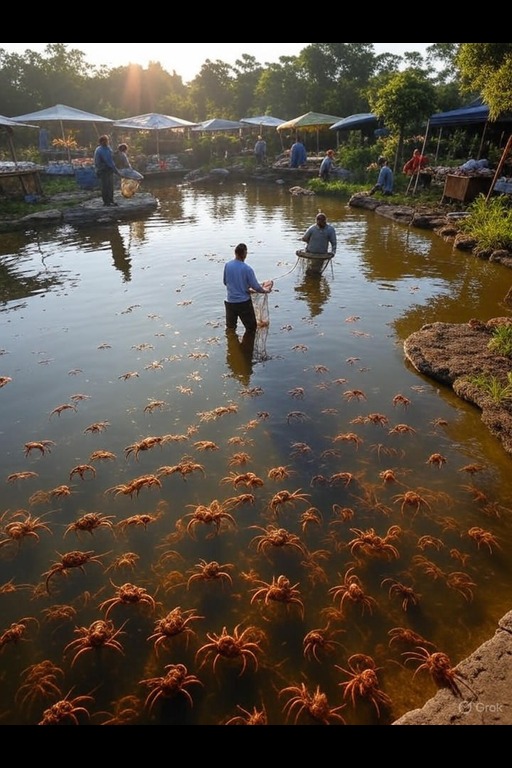
Freshwater Crab is cultivated in various freshwater ecosystems, where the interplay of climate, soil, and traditional methods shapes its characteristics. The practices of local aquaculture yield crabs that vary in flavor and texture depending on seasonal influences. Surpluses are often traded with neighboring regions, ensuring a steady exchange of this prized resource. Caravans particularly value preserved forms of Freshwater Crab, which serve as essential provisions for long journeys and winter stores.
Universal
Biomes
Politics
Alignments
Races
Resources
Classes
Elevations
Religions
World
No accessible MAPs found.
Biome
Politics
Alignment
Race
Resource
Class
HeightMap
Freshwater Crab
Detailed Description
Freshwater Crab thrives in diverse aquatic environments, where the merging of fresh and brackish waters creates ideal conditions for their growth. This resource is cultivated through a combination of sustainable farming techniques and wild harvesting practices that respect local ecosystems. The crabs are often raised in specially designed ponds or rivers, where the water quality and nutrient availability can be meticulously controlled. Farmers adapt their methods according to seasonal changes, reflecting a deep understanding of the natural cycles that govern these creatures' lifecycles. The culinary uses of Freshwater Crab are varied and celebrated across regions. Chefs and home cooks alike experiment with different preparations, from hearty stews to delicate sauces. The meat is lauded for its sweet, tender quality, which can be enhanced by various cooking methods, including steaming, baking, or frying. Preservation techniques also play a significant role in extending the crab's shelf life. Smoking, salting, and pickling are common practices that not only preserve the crab but also impart unique flavors, making these preserved forms sought after for use during off-seasons. Trade networks thrive on the exchange of Freshwater Crab, with merchants transporting both live and preserved crabs across vast distances. The demand for this resource often peaks during festivals or gatherings, where it is featured prominently in celebratory feasts. Communities have developed special rituals around the harvesting and consumption of Freshwater Crab, highlighting its cultural significance beyond mere sustenance. The resource's economic impact is profound, as it supports local aquaculture industries and enhances the culinary landscape of various regions. As awareness grows about sustainable practices, many farmers are turning to environmentally friendly methods, ensuring that Freshwater Crab remains a staple for generations to come.
Examples
Common products derived from Freshwater Crab highlight its versatility and appeal. Smoked Freshwater Crab offers a savory and robust flavor, ideal for appetizers or as a component in gourmet dishes. Salted and pickled variants serve as effective means of preservation, allowing the intricate flavors to develop over time. Freshwater Crab stew brings warmth and richness to any meal, often featuring seasonal vegetables and aromatic herbs. Additionally, Freshwater Crab oil, extracted from the shells and bodies, is prized for its culinary applications and is often used to enhance various dishes.