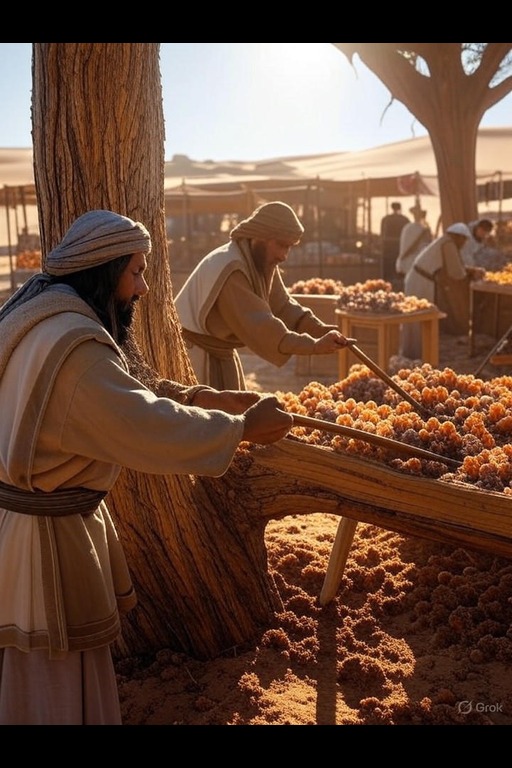
Frankincense Resin is a prized natural substance gathered from specific trees thriving in arid, sun-baked environments. Harvesting requires skill and a deep understanding of seasonal patterns to ensure sustainability. This resin plays a vital role in various local industries, supporting the craft of pitchmaking, the production of incense, and medicinal applications. Settlements often form around reliable sources of this resin, facilitating trade and cultural exchange.
Universal
Biomes
Politics
Alignments
Races
Resources
Classes
Elevations
Religions
World
No accessible MAPs found.
Biome
Politics
Alignment
Race
Resource
Class
HeightMap
Frankincense Resin
Detailed Description
Frankincense Resin is a complex substance derived from the sap of certain trees, which flourish in hot desert biomes. This resin has garnered attention for its versatility and has become a cornerstone of local economies. The extraction of frankincense involves careful incisions made in the bark of the trees, allowing the sap to ooze out and harden into droplets. The timing of the harvest is crucial; it must align with climatic conditions and the natural life cycle of the trees to avoid overharvesting and depletion of stocks. Skillful harvesters develop a keen instinct for when to collect the resin, ensuring that the delicate balance of the ecosystem is maintained while reaping the benefits of this valuable resource. The resin itself has a distinct aromatic profile that is celebrated across various applications. It serves as a key ingredient in the production of incense, where it is often blended with other natural substances to enhance its fragrance and burning quality. Additionally, frankincense is utilized in the craft of pitchmaking, where it is transformed into a durable and sticky material used for various purposes, including sealing vessels and creating waterproof coatings. In herbal medicine, preparations made from frankincense are believed to possess various beneficial properties, contributing to its demand among practitioners and local healers. Trade in frankincense resin generates significant economic activity, with routes established for its distribution to distant markets. Artisans often create finely crafted products from the resin, including incense cones, salves, and sealed jars that cater to both practical and ceremonial uses. The presence of frankincense harvesting can transform the social and economic landscape of communities, establishing centers of trade that attract travelers and merchants alike. As a result, the resin is not merely a commodity but a vital link between the natural world and human craftsmanship, enriching the lives of those who engage with it.
Examples
Frankincense Resin is commonly transformed into various products that find utility in everyday life. For instance, it is crafted into incense cones that release soothing aromas when burned, often used in rituals or relaxation practices. Additionally, the resin serves as a base for salves, providing a natural remedy that supports skin health. Artisans also utilize it to produce sealed jars, which are valued for their ability to preserve contents for extended periods. Lastly, its transformation into torch fuel allows for the illumination of spaces, enhancing both functionality and atmosphere.