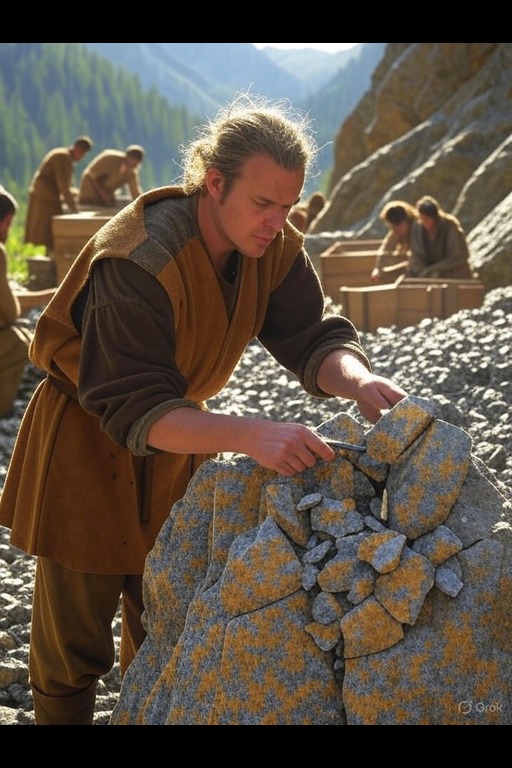
Flint Shards are fragments of hardened silica, often collected from natural outcrops or produced during the shaping of larger flint masses. This resource is graded on site, as only the finest pieces are deemed suitable for various applications. Once selected, these shards are packed carefully into crates for transport, while the finer particles are dried and bagged for use in kilns or as mortar. Their versatility makes them a key component in several industries, particularly masonry and pottery.
Universal
Biomes
Politics
Alignments
Races
Resources
Classes
Elevations
Religions
World
No accessible MAPs found.
Biome
Politics
Alignment
Race
Resource
Class
HeightMap
Flint Shards
Detailed Description
Flint Shards serve as a fundamental resource in numerous construction-related domains. This naturally occurring material, often found in regions characterized by taiga landscapes, is typically harvested from exposed rock formations. The process of extraction requires both skill and knowledge of the terrain, as the best quality shards are located in specific strata. Once gathered, these shards undergo a grading process to determine their usability based on size and clarity. Workers meticulously sort through the collection, ensuring that only the most robust and intact pieces make their way into crates for shipping. In the realm of masonry, Flint Shards are highly prized for their durability and sharp edges, which facilitate the creation of sturdy bricks and tiles. Craftspeople can shape and mold these fragments, combining them with other materials to produce a variety of construction elements. Beyond their role in masonry, Flint Shards find significant application in pottery. They are often mixed with clay to enhance the strength and texture of ceramics, yielding products that are not only functional but also aesthetically pleasing. Furthermore, the versatility of Flint Shards extends to trade, where they are exchanged for other goods and materials. Their ability to be easily transported and their wide-ranging applications make them a valuable commodity in markets. The finest shards can fetch a good price, while the finer particles are routinely employed in preparing mortars and plasters, serving as a binding agent that enhances structural integrity. This adaptability is essential in ensuring that both artisans and builders can meet the diverse needs of their projects, resulting in a vibrant exchange of resources that fuels local economies.
Examples
In practical use, Flint Shards are transformed into bricks and tiles that form the foundations of sturdy structures. Additionally, they play a crucial role in crafting ceramics, where their incorporation into clay bodies leads to durable and refined pottery. The shards are also pivotal in the production of cut stone, further enriching the options available to builders and craftsmen. Finally, as trade goods, these shards facilitate commerce between settlements, serving both as a means of exchange and a testament to local craftsmanship.