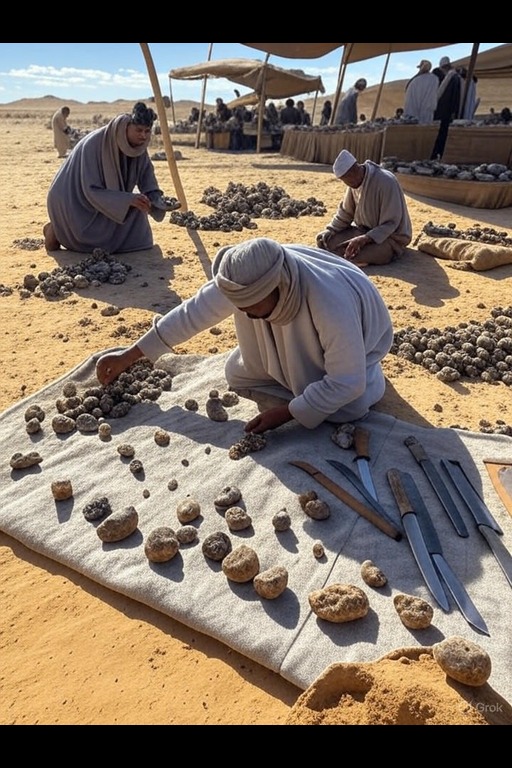
Flint Nodules are naturally occurring stones commonly found in various biomes, particularly in hot desert regions. They are highly valued for their durability and sharp edges, making them essential for a variety of crafts and construction projects. Harvesters must skillfully collect these nodules, balancing the need for resources with the sustainability of local stocks. Their significance is reflected in the numerous settlements that emerge near abundant sources, driven by the demand for this versatile material.
Universal
Biomes
Politics
Alignments
Races
Resources
Classes
Elevations
Religions
World
No accessible MAPs found.
Biome
Politics
Alignment
Race
Resource
Class
HeightMap
Flint Nodules
Detailed Description
Flint Nodules are geological formations that result from the natural processes of sedimentation and mineralization. These nodules are typically found in sedimentary rock layers, where they occur in abundance due to the geological conditions favoring their formation. In many biomes, especially those characterized by hot deserts, flint is unearthing the earth's crust, often exposed by erosion or other natural occurrences. Harvesters venture into these areas, equipped with tools and knowledge passed down through generations, to extract the stones critical for their communities. The extraction of Flint Nodules requires not only physical skill but also a deep understanding of seasonal patterns and ecological balance. Skilled gatherers know when to harvest to minimize impact on local populations of nodules, ensuring that they do not deplete the resource for future generations. This sustainable approach to flint harvesting has allowed many communities to thrive, as they continually return to the same sites without facing significant depletion. Flint is used extensively in masonry, where it provides a sturdy base for structures, as well as in sculpting, where artisans carve intricate designs that stand the test of time. The versatility of Flint Nodules extends beyond construction. They are also transformed into a variety of products, including cut blocks for building, statues that serve both decorative and commemorative purposes, grindstones for sharpening tools, gravel for pathways, and paving stones for roads and plazas. Each of these products reflects the cultural significance of flint within the community’s economy and craftsmanship. Trade routes often develop around the distribution of these products, linking communities and fostering economic interdependence. The presence of flint can elevate a region’s standing, as artisans and builders seek out the finest nodules to enhance their own work, further embedding this resource into the social fabric of settlements.
Examples
Examples of products crafted from Flint Nodules include intricately shaped statues that showcase the skill of local artisans, cut blocks that serve as building materials for robust structures, and grindstones that are essential for maintaining sharp tools. Additionally, gravel sourced from flint can be used to create stable paths and roads, while finely crafted paving stones adorn public squares and marketplaces. The multifaceted uses of flint underscore its importance in both trade and daily life across various communities.